Alice Hoffman Prize for Fiction
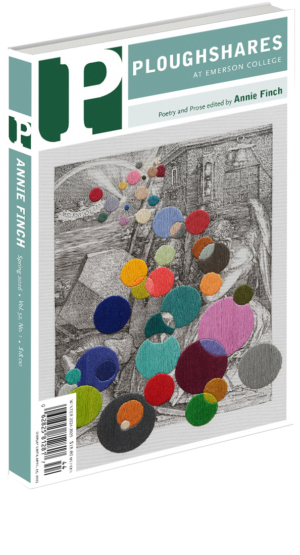
Ploughshares is pleased to present Barbara Lock with the fifteenth annual Alice Hoffman Prize for Fiction for her story “Keep You Safe,” which appeared in the Summer 2025 issue of Ploughshares, guest-edited by Victor LaValle. The $2,500 prize, sponsored by acclaimed writer, guest editor, longtime patron, and member of the Ploughshares advisory board Alice Hoffman, honors a short story published in the journal in the previous year. Of ‘Keep You Safe,’ Hoffman writes:
“Barbara Lock’s extraordinary story ‘Keep You Safe’ is a voyage into the perils of motherhood, and of the fear and love that is as overwhelming and as deep as any body of water. Beautifully written, it’s the examination of family mythology and protection, the kind that can ruin you or save you.”
Barbara Lock teaches Narrative Medicine at Columbia University Vagelos College of Physicians and Surgeons. She is Editor-in-Chief of Variant Literature. There’s more about her at barbaralock.com.
Ploughshares’s Marketing Associate Lachlan Applegate wrote the following questions for Lock about her story and process.
Lachlan Applegate: The setting of “Keep You Safe” plays a crucial role in the development of the plot. Can you discuss your relationship as a writer with coastlines? Was the beach a starting place for this story, or did the environment take shape over time?
Barbara Lock: This story grew out of an image of two young children throwing heavy rocks into the water. I was intrigued by the image, by the contrasts and contradictions. How do the children lift and throw such heavy objects? What do they make of their weight, of the disappearance of the stones beneath the surface? Are the children learning about the physical properties of our world, and how does that affect their understanding of the spiritual properties of our world? Water has special physical properties, going from solid to liquid to vapor in the space of our daily lives. Along coastlines, water ebbs and flows. Water follows gravity and other invisible forces, as do we all. Water is a mirror. Water is our unconscious. What does it hide, what does it reveal? After several weeks of contending with the image of the two children throwing rocks into the water, a mystery was revealed: the two children were at the beach without a parent. Why?
I do tend to feature water and coastlines in stories. I don’t think it is because of particular personal experience along coastlines, but that my inner muse, my unconscious, recognizes in water the near infinite potential for metaphor.
LA: “Keep You Safe” includes a description of an origin story about the discovery of tobacco. Do you often explore intertextuality in your work? Can you talk about this as a formal and/or structural choice?
BL: Considering a narrow understanding of intertextuality to be the relationship of one set of written words to another set of written words, I find it to be a fruitful tool to generate narrative. In this case, as I was writing the main story, a second story came into my mind. I did not grasp at the time how the two stories would relate. Simply, I gave myself permission to generate whatever sought to emerge. Our minds form associations between that which we encounter in sequence; we solve mysteries moment by moment. Writing without knowing what happens next is wonderful fun.
The main conscious choice related to the placement of the origin story within the larger story had to do with the knitting, the integration, the encoding. By choosing to have my narrator articulate the origin story as recalled thought, I double-encoded the story as narrative, a sort of Inception moment. Often, interior thoughts of a character read as exposition; the craft here had to do with how to step around that.
LA: I was interested to learn about your background in teaching Narrative Medicine. Did your experience in the medical field influence this story?
BL: “Keep You Safe” does not contain specific medical content. My experience in the medical field is largely one of detection, of solving daily mysteries. When I teach Narrative Medicine to medical students, my main teaching point is that our right brains have value. Intuitive people are often asked to prove, with objective data, how they know something. How does a doctor know that a patient with a headache does not have an intracranial bleed, a severe infection, or a brain tumor? Did they use a clinical decision rule? A CT scan? What if, by all the logical rules applied, the patient is deemed to have nothing life-threatening, but their experienced provider is still worried? This is the domain of the right brain, of narrative. Experience can be thought of as collection of stories. AI might well supplant our left-brained decision-making, but the value of our right brains, our intuition, our connection to spirit, to the collective unconscious, will persist.
LA: “Children have a genius for peril,” Ian says in “Keep You Safe”—an unsettling line that wields suggestive power. Your study of violence in this story is often embodied by proximity or implication. When writing, how do you balance what to reveal and what to hold back?
BL: A successful narrative creates an experience for the reader. While we might initially write to satisfy our own unconscious needs, a later version of the story, a version that resonates with a variety of readers, will permit the reader to enter, however briefly, the consciousness of the narrator. What does the narrator experience? That is what should be revealed on the page. Details that come too fast and too hard, experiences that would be difficult for the narrator to process in the story-time the reader has agreed to enter, might be worth revisiting. How does the experience transmit from the writer’s mind to the narrator’s mind to the reader’s mind? To what discomfort will readers consent, and what will make them disengage? The consumption of narrative might be the best way to experience danger in relative safety.
LA: What questions, obsessions, or areas of research continue to arise in your writing? Would you be willing to share any plans for future projects?
BL: Our particular present moment, with the intentional violent dismantling of societal institutions and constructs, along with the notion that it is somehow a good idea to stop thinking for ourselves in each and every way that a computer can do it for us, is what holds my attention right now. Certainly, I have material for a collection of stories, and various other manuscripts. But the narrative encoding of the now, the solving for x—what will happen next?—consumes me, to the detriment of other worthy projects. I have learned to allow my attention to go where it will. I have excellent instincts, lifesaving instincts. I have advanced logical and intuitive capacity. And so, if my unconscious wants to pay attention to the present moment, I’ll allow it. Eventually I will learn to observe, to ride, to float above, and then the generation will return.