On Sustained Attention: An Epistolary Editors’ Note
Dear Hanif,
As we curated this fall’s issue, we talked about the importance of sustained attention. It seems to me that sustained attention is not only about remaining focused on one thing, but a willingness to be open, to follow a thought beyond its obvious destination. You noted “how much trust it takes” to engage in “writing and thinking that has many tendrils that connect to a larger idea … ” I keep returning to that thought. There is power in nuance—the layered thinking that evokes poem-making through leaps, gestures, allusions, breath—or the panoramic breadth of a great lyrical essay, like those included in this issue, that weave history, research, anecdote, and personal narrative to arrive at a place where the reader and writer are changed.
In writing you this letter, I’ve been reminiscing about snail mail, and the hours of sustained attention I once spent writing letters home, to pen pals across the world, or even to a friend I’d see the next day at school. Letters unfolding with wild associations, drawings, jokes, stories; letters written in secret code, or in backward handwriting the recipient would read with a mirror. Writing in longform is like writing a letter to an invisible recipient, hoping it will fall into the right hands. An act of trust, as you said, in the self.
Rereading the correspondence of one of my favorite letter writers, Sylvia Plath, I am struck by how intimate it is to look through another person’s letters. You watch them become, or unravel. You laugh with them, or, knowing what the future will bring, shout warnings across time. At twelve, in my grandmother’s closet, I read all the love letters my mother sent to her high school boyfriend Brad, the pink-hearted vulnerability of her bubbly handwriting a portal to my present-day voyeurism. I realize that, for me to be reading Mom’s love letters, Brad must have returned them. There on the pages was my mother before she was Mom, falling in love. A look into something raw and private and rambling and enormous.
Dear Jenny,
It is wonderful to see you reference the act of letter writing, because I have been thinking about writers and their correspondences for almost two years now, ever since I got to spend some time in the rare book library at Yale in the autumn of 2024, going through their collection of Countee Cullen’s letters. Letters to him, letters that he sent others. I was struck by the affection and urgency in the letters, sometimes finding the poet overwhelmed by his own feelings that he was struggling to make sense of, sometimes finding the poet steeped in gratitude for the opportunity to write something that, without that engine of gratitude, would feel perhaps mundane. And then, in the letters to him, there were a whole host of people happy to receive a poem from him. Happy to have gotten something in his handwriting. Just happy to hear from him. What a miracle that is, I found myself thinking.
My handwriting is comically awful. I have friends who insist that I write “like a serial killer”—all caps, letters haphazardly sized and slanted. And still, I’ve taken to the task of letter writing over the past couple of years. To friends, to beloveds, to poets I don’t know but am thankful for. I appreciate it for how it has slowed me down, not just in the craft of writing in my own chaotic handwriting and attempting to make it legible, but in every world that exists beyond the page. I have become slower, and more in tune with the small movements and gestures that might send me back to writing, in part because I am seeking things that the people I love might also love. And so, I am listening for the rich specifics of birdsong, so that I might describe it to my pal who loves birds. I am noticing the way the sunflower hangs its head down toward the grass at the end of spring, so I can write to a friend and ask how her garden is surviving.
Dear Hanif,
In a 1956 letter to her mother, Plath wrote, “You need to imbibe power and health and serenity … I feel with all my joy and life that these are qualities I can give you, from the fulness [sic] and brimming of my heart. So come, and slowly we will walk through green gardens and marvel at this strange and sweet world.”
I love how you describe this process of noticing: a slow walk, a long letter, a conversation that begins intentionally and spirals until it’s overgrown and tangled—all acts of tenderness and care. Susan Nguyen captures this intimacy and attention that comes with “the unfolding of a letter” in her wonderful crown, “Every Time I Choose English”: “I don’t desire / to leave, only to go / back to the beginning.”
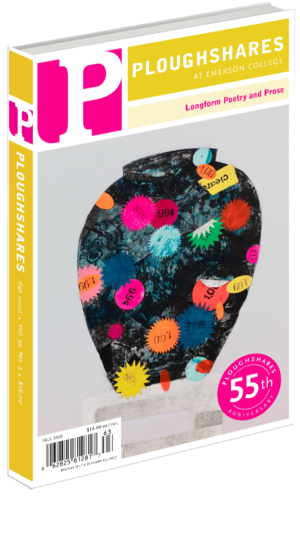
I also marvel at what time and distance and attention can accomplish—cultivating a garden, keeping a birding journal, listening carefully to this “strange and sweet world.” In Erik Benson’s cover art, Price Tag Sticker Mend, he fractures a splinter across a dark vessel, mended with brightly colored stickers. The fragility of something once handmade is repaired by other hands, through an act of care: revived, reincarnated, retained of its longevity and purpose. Even loss is an act of attention to absence, as in L. A. Johnson’s poem, “Roadside Memorial,” where a long stretch of freeway is “indifferent except it holds / the loss // of someone loved.” The road is unchanged, but grief transforms it.
Dear Jenny,
All writing by hand becomes longform writing for me, because it is such a slow process when compared to how I type, and I have come to cherish that process. One of my great concerns is that people will eventually lose a specific kind of desire for close attention, the thing that demands we affix ourselves to a place for a long time, seeking a revelation that only the process can afford us. And the process isn’t always an artistic one, even if it is in my example. Loving someone well is a process. Loving ourselves well is a process. All of it demands moments of prolonged standing in a harsh and revealing light until, if we’re lucky, it becomes a bit less harsh, but no less revealing.
I love this issue because the reading of these pieces not only urged me toward a depth of attention and affection, but it also reminded me that reading the work of others, too, is a process that, if we’re lucky, shocks our senses alive, the way a good chorus of birdsong does.
Dear readers,
We offer you a selection of thirteen longform stories, essays, and, for the first time in Ploughshares’ fifty-five-year history, longform poems, all of which we believe practice that intimate act of trust that comes with sustained attention.
With love,
Hanif & Jenny