
Poets’ Journals and the Essayists Who Wrote Them
For our inaugural PS post, please enjoy this conversation with Kathryn Nuernberger, Heidi Czerwiec, and Lee Horikoshi Roripaugh about the evolution of lyric essays as seen in the writing of Maxine Kumin, Annie Dillard, and Toi Derricotte, originally published in Ploughshares and linked below.
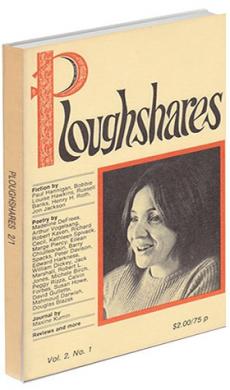
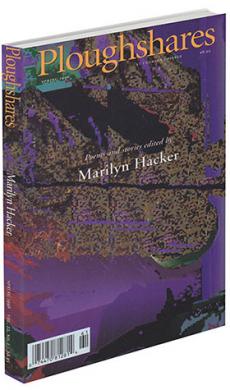
Kathryn Nuernberger: Welcome to PS! PS is Ploughshares’ tribute to our literary histories; an addendum to the print issues. PS presents contemporary dialogues in the epistolary tradition–love letters that revisit, remix, and reimagine our literary past, present, and future. Here you’ll find essays, interviews, recordings, and other multimedia ephemera in direct conversation with Ploughshares’s 50+ year archive. I’m Kathryn Nuernberger, author of three lyric essay collections and four poetry collections. My latest book is Held: Essays in Belonging.
When Jenny Molberg, the editor of Ploughshares, invited me to create a love letter for PS, I started at the beginning of the Ploughshares archive and read my way forward. This of course is a fascinating way to get a snapshot of a particular corner of a literary landscape at a particular moment in history. Many things struck me – the overwhelming Whiteness, the overwhelming maleness of the tables of contents can’t really be understated. I did not love that. But I was also struck by the unfamiliarity of the “creative nonfiction” sections of the TOCs – during the ‘70s and ‘80s the nonfiction work in the magazine was mostly just book reviews, with the occasional inclusion of something called “poets’ journals.” I recall reading a few poets’ journals in the ‘90s and early 2000s – Charles Simic’s stands out in my mind. But this genre seems to have fallen away in more recent decades. Or maybe we just call it something else now. In the Ploughshares issues from the 80s and 90s even when the nonfiction pieces weren’t described as journals and had titles as essays do, they still always had the segmented, private, informal, and lyrical quality of a poet’s journal. And they were usually written by people known primarily as poets. It reminded me how very new creative nonfiction is as a literary genre. There has been journalism for a very long time of course, but that was not something you would publish in a literary magazine. Memoir and autobiography as a literary form are relatively nascent, I think, and even the personal essay, though as old as Montaigne at least, has only recently become a fairly popular literary form. At least, I think I might know these things. But I found myself wondering what the experts on the history of literary nonfiction might have to say about these works of nonfiction and their context.
So I’m very happy to be in conversation with you, Heidi Czerwiec and Lee Horikoshi Roripaugh, and to talk about a few essays in the Ploughshares archive. I’m anticipating our conversation together will become a kind of love letter to the lyric essay and a remix of the story of how creative nonfiction emerges as a genre. And of course you are the perfect people for this conversation.
Heidi Czerwiec writes essays and poetry and every hybrid in between. She’s the author of Crafting the Lyric Essay: Strike a Chord and an editor of Assay: A Journal of Nonfiction Studies. Her other books include: Fluid States, a lyric essay collection, and the poetry collection, Self Portrait as Bettie Page. With Lee Horikoshi Roripaugh she is the editor of Rose Metal Press Field Guide to Writing the Lyric Essay. Lee Horikoshi Roripaugh (she/they) is a biracial Nisei and the author of five volumes of poetry, most recently tsunami vs. the fukushima 50 (Milkweed Editions, 2019), named a “Best Book of 2019” by the New York Public Library and listed as a poetry finalist in the 2020 Lambda Literary Awards. Her book of lyric essays,unMothered, unTongued, winner of the Sue William Silverman Prize for Creative Nonfiction in the 2024 AWP Award Series, was published by the University of Georgia Press in September 2025. Their fiction collection, Reveal Codes, winner of the Moon City Press Short Fiction Award, was published by Moon City Press in 2023, and her chapbook, #stringofbeads, a winner of the Diode Chapbook Competition, was published by Diode Press in 2023. Horikoshi Roripaugh received the Association of Asian American Studies Book Award in Poetry/Prose for 2004 and was a 1998 winner of the National Poetry Series. Seven of their essays have been listed as Notable Essays in Best American Essays.
So let’s dive in. start with an overview question based on three pieces from the Ploughshares archive we’ll focus on in this conversation: Maxine Kumin’s “Estivating (journal),” Annie Dillard’s “Four Bits,” and Toi Derricotte’s “Blacks at the U.” (Listeners, all of these can be found and read in their entirety on the PS blog.) How do you understand the genre of “poet’s journal” to fit into the story of the emergence of literary nonfiction and especially the thing we are lately calling “the lyric essay”?
Lee Horikoshi Roripaugh: I was particularly struck by the ways in which they felt almost in dialogue with the Heian Japanese women’s tradition of writing poetic diaries, or journals, or, say, Sei Shōnagon’s Pillow Book, which is, you know, such an early example of poetic prose that, I think, creates a possible lineage for what the lyric essay is, or what the lyric essay can do. But I think that also this question of poetic journals got me to thinking about public writing vs. private writing— something about interiority, questions of subjectivity—private elements which I think we sometimes feel occur more in the realm of poetry. But seeing them in this diary or journal format really felt to me like it was sliding into that hybrid space of lyric essay as well. Something that does, I think, really focus on some of the interiority, on those sorts of more small, nuanced quiet questions of subjectivity that we see addressed in poems, but here, in kind of an essay, format. So it did feel very familiar to me, and, really felt very close to my own, impulses as a lyric essayist.
Heidi Czerwiec: I’m so glad you brought up Sei Shōnagon. I knew that that would just be the perfect entryway for you, and especially in thinking about how much she predates Montaigne in her writings, too. There’s also a tradition that came to my mind. John Donne’s “Devotions Upon Emergent Occasions.” As he was dying, probably of cancer, he pretty much each day was writing these little moments where he is thinking about dying and what that means, and while they’re in prose, they have that very lyric sensibility. They give us a lot of the well-known phrases like “no man is an island,” or “ask not for whom the bell tolls, it tolls for thee.” Like, those came from those writings. I like what you were saying, Lee, about the interiority, that it seems like these poets’ journals and the examples that Kate gave us to read, and the ones that we’ve mentioned all have that. Instead of a journal being the narrative account of, like, this happened, and then this happened, and then this happened, we have these lyric moments that are sort of that interior, like these lyric moments that get inhabited, and then just sort of juxtaposed next to each other, going from moment to moment, and then letting them steep, just letting them sort of move laterally by accumulation rather than by succession.
But Kate, I would also love to hear you talk some about this, because I know so much of your practice has been in almost journal-like daily engaging with, you know, plants that were used as abortifacients, or accounts of execution of people as witches, and taking one each day and writing on it.
KN: Yeah, that’s funny, because I do journal every day. And everything begins as a journal, because journaling is my trick for taking the pressure off. Like, I don’t actually have to write anything except a page of blah blah blah, and then I fill a notebook, and then I come back later and excavate it for poems or essays. But a lot of times I can’t think of what to say, so I’ll research. So there’ll be lots of pages of research, and the paradox of my work being personal sometimes is that that’s actually the part I often am adding later. I get obsessed by something I’m researching, and I’m just writing down tons of facts in my notebook, and I think they’re so interesting, and then later I realize I have to bring in something from what was happening in my life to help readers be in the same emotional space with me. So the work is an illusion. It feels diaristic, but that’s just a layer over the actual diary, which is like a Wikipedia article.
I have other questions later about time, but today is January 13th that we’re recording this, the podcast will probably roll out a month from now, so who knows what the future will be like, except I think we can predict it will probably feel as chaotic and inexplicable as it does now. But Heidi and I are in the Twin Cities, and there’s ICE everywhere, and it’s very difficult for me right now to make sense of what’s happening, so I just keep writing. Almost like Heather Cox Richardson, who’s the historian who writes every day: This is the date, and then she lists what’s happening, and I’ve found that very grounding. To say yes, thank you for this list that helps me articulate what is actually happening, because, what is happening feels hard to make sense of because it’s intentionally chaotic, right? There’s a blitz of total mayhem and cruelty all the time, and it’s meant to be destabilizing. So I have been appreciating the way the journal feels like it has a capacity to be grounding in the sense of, these are the things that I know are true, here are the facts we know to be true today.
And I’ve also been noticing, in a poetic way, this is what’s happening out my window, this is what it feels like to walk through my neighborhood today. And my neighborhood today is full of ICE agents, so, it feels scary to walk through my neighborhood today. My neighborhood is full of really brave people with whistles today, and that feels beautiful, and also still really terrifying. I’m a little bit off-topic here in a very big way, but I’ve just been thinking about what can the art of the journal do to make an intentionally disorienting and ungrounding situation, be grounded. I’ve been appreciating that this is something art does for us.
Let’s go back to the essays. Let me bring it back to the point. Let’s see. So, Maxine Kumin near the beginning of her essay “Estivating (journal)” which appeared in issue 5 in spring 1974. I was thinking about this one a lot, too, because she talks about the headlines and the hearings, and it was the Watergate hearings that she’s writing about. Being on a horse farm in the middle of the Watergate hearings, and she has this lovely passage where she writes: “Things tie themselves together with little quote marks and perhaps the string crosshatches itself into a statement in time, who knows? My son, scanning The New York Times one weekday morning when it was heavy with financial articles of the technical sort, complained, “not even anybody good died today” and I hang onto that phrase as it reflects the kind of stasis I am in, estivating here.” I’m intrigued by this word, “estivating,” which refers to the arrangement of flower’s petals and sepals when closed in bud, or the torpor an animal enters during a hot or dry period. I wondered about the ways lyricism, in poetry and in lyric essays that sidestep the thrust of a narrative arc, elevates and embraces estivation as a germinal mode of being for art?
HC: I think a lot about this, and I think it ties back to what I was saying a moment ago about the poets’ journals not being that narrative succession. That estivating, with having the petals and sepals overlapping as they’re closed in the bud, that it’s more moving in a spiral, if that makes sense. So, that lateral moving, where instead of moving straight forward by succession or chronology, instead putting ideas or images or thoughts side by side by side, and kind of letting them spiral around. So it does advance, you know, those sepals and the petals don’t come into a circle, they do spiral, so there is an advancement, but it’s more via juxtaposition, via accumulation. They layer on top of each other, rather than moving straight forward, so it has that almost like a labyrinth-type movement to it.
It also made me think, and Lee, you might agree with this, that in the Rose Metal Press project that we’re working on, torrin greathouse has a piece in that where she’s been adapting Alice Fulton’s Fractal Poetics to lyric essays, and so talking about using fractals, and thinking about the spiral in nature, and how they’re overlapping like that as well. I also love the suggestion where you’re talking about the torpor of those buds, or all of the petals overlapped in the bud, and the torpor of an animal as a suggestion of, like, biding one’s time or having a slow build or a slow wait that doesn’t necessarily tell you right away what it’s about. So it has that unfolding, that biding your time, before it reveals everything.
LHR: Yeah, absolutely. I was also thinking about torrin, as well as Natanya Pulley, and her beautiful essay on the spiral as kind of a structure by which she’s shaping her lyric essays. I do love the whole idea of estivation in both of its meanings, because I increasingly have come more and more to distrust conventional, linear narrative, because there’s something about it that feels so predetermined, that forces climaxes and closures that don’t seem to me to really be in alignment with the chaos and complexity of not only this contemporary cultural moment, but our lives as we’re trying to navigate the scariness and chaos of this contemporary moment. But when I think about the arrangement of petals, or the question of torpor, the idea of trusting in the process so the meaning-making arises organically, or the patterns start to manifest in an organic shape and lift to the surface and make themselves felt or apparent, that seems to be something that feels characteristic of what I might suggest as a lyric structure, or a lyric process of meaning-making. The way in which the poet will let something kind of marinate, as opposed to, this happened, and this happened, and then this happened, and then there was a big explosion in the end.
HC: I love that. I love that. The organic, yeah, I think that’s a really good way of tying that in.
KN: Yeah, I’m always really bumming out my students who want to write long-form narrative memoirs, in a novelistic fashion. Well, I mean, I’m trying to be helpful, because I try to be a good advisor, but I’m always saying I’m just super skeptical of this move, because it requires believing everything happens for a reason, right? If the chronology of your life is going to line up with your capacity to make sense of things too, in order to build this coherent narrative arc, just structurally chronological memoirs seem to have a pretty tough baked-in problem with also seeming true, because life is a mess, and then you make sense of it later.
HC: It’s so strange when you’re talking about nonfiction, which seems to have, like, this truth or verity to it, so it doesn’t quite seem honest or it seems artificial to impose that neat narrative arc on life that way.
LHR: Yeah, and it seems very controlling, too, which sort of feels like an imposition of power, as well as an imposition of structures that are inherently White, patriarchal, ableist, cis-het.
HC: With the lyrical, too, instead of letting the patterns pull from the material itself and where you’re noticing repetitions, things spiraling on themselves, where you’re finding the meaning is in the repetitions, and in how those lyric moments pile up, rather than in imposing a structure from the outside.
KN: What you’re saying aligns with some questions I had about Toi Derricotte’s essay, “Blacks in the U” which appears in the Spring 1996 issue, and it is one of the first times we see Ploughshares publish works of creative nonfiction that are not a poet’s journal, but an essay. There’s a lot about this particular issue that is notable – Marilyn Hacker was the guest editor, and this issue features greater diversity than any of the previous issues. She highlights so many major voices who are still so influential today. 1996 was a good year for Ploughshares and Hacker was a good editor for them. There are two nonfiction pieces in the issue, one by Toi Derricotte, and in keeping with Ploughshares trend, the authors are both poets (Adrian C. Louis is the other) who use a segmented style that pieces together stories and ideas through sensory impressions and snippets of scenes. I wanted to talk about Toi Derricotte’s essay, which I think remains so powerful to this day. In it she writes about colorism and about being the only or one of very few Black women in a university where her colleagues say she looks White. She describes another Black woman being hired who her colleagues tell her also looks White. The essay chronicles Derricotte’s anxieties before, during, and after meeting this woman for the first time. In this essay she tries, with honesty and vulnerability, to unpack the loneliness and fears of her positions, as well as the internalized racism. She notes the ways this kind of dynamic creates so many fucked-up layers on top of every interaction, including and especially with the woman who has just been hired. In lyric fashion, the essay spirals in unexpected directions, towards her complex relationship with her mother and trying to be the person someone else needs or wants her to be, culminating in a confession of fear that feels like an attempt to exorcise it and imagine some more honest and genuine pathway to connection. In her shortest segment, near the end, she writes just these sentences: “Race isn’t a metaphor. Color isn’t a metaphor. It doesn’t feel like a metaphor. It hurts as if it’s my skin. I feel sick. I hate myself. I make you hate me. I separate. I come back. Forgive me. This is the best I can do.”
I’m curious to hear how you would situate this essay in the tradition of poets writing essays. How does lyricism serve her here, but also how does a prosey directness also operate in a piece where the writer is directly addressing so many fraught subjects. I was thinking about how lyrical fragmentation could feel risky when writing about a fraught subject like race, because maybe you don’t want to let go of the reader’s hand as you walk them through your thinking, maybe you don’t want to risk misunderstanding. And on the other hand, I was thinking about how lyric leaps might be a relief when working with fraught material – that sometimes there are feelings and experiences that are best granted a bit of ineffable space, a moment where writer and reader sit together in contemplative silence. I’m wondering how this essay’s ways of navigating its fraught subjects are similar to or different from other lyric essay techniques you’ve seen in works you love or used in your own work.
LHR: I think it’s such a fantastic essay, and for me, I feel like it foreshadowed moves in essays that I love, like Geeta Kothari’s “If You Are What You Eat, Then What Am I?,” which looks at immigrant culinary experiences, food as a kind of cultural literacy, food as a signifier of community, and belonging, food as obligatory assimilation. I also felt it really foreshadowed the incredible work Claudia Rankine did in Citizen with these short, tight vignettes of small moments, like microaggressions, yet when you look at those small, instances and the ways in which they cumulatively pile up, or you look at that small moment and see the ways in which it unfolds into revelations of structures of White supremacy in really powerful ways, that you can start to understand how deeply it’s embedded and how insidiously it’s embedded. I feel like those are both segmented or fragmented works that are creating, then, the space through association for the reader to kind of feel those feelings for themselves, and also begin to connect those dots for themselves. Which means maybe it’s a kind of learning that is more powerful, because the reader’s arriving at those conclusions on their own. At the same time, the kind of very direct statements create that sort of interiority or subjectivity. So it’s not this kind of expository study on these questions of race or immigration or belonging or microaggression. There’s skin in the game, to come back to the quote that you read from Toi Derricotte.
HC: Yeah, I would absolutely agree. I’m glad that you brought up Claudia Rankine. It does seem like the fragmentation and the spaces do operate in a way that kind of lets it exist between poetry and prose, and the prose gives the reader a sort of lulling sense of, oh, this is prose, this isn’t scary. The form lets the piece work under the radar to do all of that lyric work, while also leaving those spaces for the reader to process, make those connections between what happened in the office, with her mother, and all those other moments.
It made me think of Dinty Moore’s essay, “Positively Negative” that’s in Nicole Walker and Margot Singer’s Bending Genre, where he is talking about noticing – that was one of the early works that was trying to talk about what the white space doing in creative nonfiction. He raised the same point as you, Lee, about how it invites the reader in to participate, much in the way that poetry often demands more of a reader than prose often does, but also allows the reader to engage and make those connections for themselves in a way that can feel a lot more authentic and organic when they reach that for themselves.
It also made me think of the cognitive theorist, Reuven Tsur, who wrote a lot about figurative language, since the passage that you read talked about metaphor. Letting the reader make a connection, for themselves is very powerful, and when they understand what the figurative language is doing and make that connection, that can feel so much more powerful. But then adding on to what you were saying about Claudia Rankine’s work, that one thing that I’ve noticed in her work, and that possibly is happening in Toi’s as well is the idea of using white space in Black writing to represent the White spaces in which these authors are writing, and trying to occupy with their words, too. I don’t think can be entirely discounted either.
LHR: Yeah, the moment when she says race is not a metaphor, that is such an incredibly powerful articulation. To me, it also feels like an unwillingness to aestheticize something as complex as race. I think that, she’s not willing to create, you know, a vehicle to illuminate someone’s tenor of race so that they can feel good for having read about race. But also that she’s not willing to aestheticize it, or lyricize it, in maybe some of the more traditional modes of lyricism, such as figurative language and the idea of transforming it into beautiful language in a way that allows the reader to feel comfortable from that reading experience, and there’s something so incredible about that moment.
HC: Yeah, and perhaps by having the reader do the work that goes to, like, a whole other level, when you’re talking about marginalized writers. Like, no, you need to do the work, I’m not going to do all the work for you. You need to make those connections.
KN: I was thinking as you all were talking about the way Toi Derricotte’s essay is resisting certain kinds of lyricism about the role of the juxtaposition in Annie Dillard’s “Four Bits,” and the way the essay just keeps abruptly shifting gears pressurizes the experience of reading it, I read it over and over again, trying to think about how these four bits are fitting together, and part of the fascination is that they mostly don’t. But the fact that they don’t feels important.
First I’ll share just a little passage from “Four Bits.” She’s writing about, certain kinds of sensory experiences or moments. “These times are points on which a great many pressures bear down. The mind returns to them; their meaning is never resolved. They are doors banging on their hinges, disturbing the peace. But the feeling of such times, and the fact that life produces them, are not private but universal. This feeling and fact are the very stuff of the novel: Ship of Fools, The Magic Mountain, the key scenes of a hundred modern novels. They are one of literature’s few subjects. There is, after all, time, eternity, and nothing else. And time, like light, is both particle and wave.”
I was thinking about how the form of the fragmented journal, held together loosely by themes or impressions, is able to operate as both particle and wave. We see that in Kumin’s journal, the wave of a season on a farm and the particles of a moment counting nematodes in a pile after deworming the horses or the exquisite descriptions of a day gathering mushrooms. And we see it in these “Four Bits” – four particles or moments in time. In these pieces I feel her resisting the wave, her work as a writer seems to be to try to stay with the particles as closely as she can, perhaps because she is so inclined towards flights of transcendent fancy. She looks so closely and then the crescendo of looking and looking overwhelms and we pass through the eye of the needle into a kind of divine hurricane. She writes: “You try to love the forest now, where you are, but you cannot: you no longer believe in it. It is no longer a forest but a fringe of the real; it is illusion, and its life a lie. Its soil gives way to sand. Your heart is cracking. The light breaks where the forest halts at the rim of the shore. The sea, the sea, the long clean beach, the holy God almighty sky!”
Hmm, I’m trying to get to a question here. How about this – in one of the four bits she describes overheard snippets of conversation in train stations; in another she describes a walk through the forest to the sea; in the third she describes the nude models in a life drawing class where she felt very restless and kept wandering around the room; in the final one she describes her restlessness in a hospital where she “went AWOL” as she put and went out to walk on a wall in the parking lot while waiting for some EKG results. And I guess what I’m wondering is, what do you think she’s trying to offer us, or what is she trying to achieve with these juxtapositions? Or maybe just more broadly, like, what’s up with poet-essayists doing juxtapositions?
HC: That’s a really interesting question. How are we supposed to consider these “Four Bits” together? Were they intentionally grouped together? Obviously, they were if they were published together, but, like, did she just randomly pick four or were they crafted to be put beside each other to add up to a whole beyond its parts? It’s an interesting question. And it seems like in these pieces, it’s forcing you to do that work, and seemed to be about comfort versus new perspectives, seeking out new perspectives. Which, for her, then, I think, lead to ecstatic moments with “ec-static” meaning, like, literally “outside the self.” By forcing these new perspectives, even at that one moment, she hears the perspective of the doctor perceiving her through a window, who thought, oh, that can’t be Annie Dillard, no, that’s a man. And being so far outside herself that she’s completely misidentified. Yeah, what is up with that?
KN: That’s a boy, I think, is what he said. Not, that’s a man, that’s a boy.
HC: That’s a boy, okay.
KN: Because when I was reading, I was wondering is he misinterpreting her? Is he misgendering her? Or, you know, is he looking at her out there doing this very boyish thing of walking around the parking lot on a wall kicking rocks, which feels very Annie Dillard-ish. I wondered if he was saying it more like. “Attaboy.” If it was his way of appreciating Annie Dillard in that moment. Anyway, I was trying to decide which way to read it.
HC: That’s a good point. But yeah, I think what’s up with all the juxtaposition, like you were saying, that I don’t know if I’m trying to claim something for the lyric approach with this lateral movement and juxtaposition, but I’m not not trying to claim it with that. There’s that phrase that F. Scott Fitzgerald said about true intelligence being about holding two opposing ideas at the same time. And so, there is a certain intelligence to being able to put these things side by side and see connections between them.
LHR: For me, those large juxtapositions are about seeing metaphor or patterning writ large. It’s not just at the level of the sentence, but then at the level of the piece. So, what are the patterns that are being presented to me or emerging? What are those larger, extended metaphors that I can take away? For me, juxtaposition does feel very lyric, and one of the things I’ve always loved about Dillard is I can read her in the way that I read poetry, which has a lot to do, I think, with making those connections, or making those larger sorts of metaphors, and then the way that the very particular can become universal, or the way the personal can become political. And for me, in “Four Bits,” that whole notion of the particle versus the wave comes up. To be a person having this very particular, personal experience, but then the ways in which that becomes about a person in context with different people or larger kinds of communal or cultural movements, and what does that mean? There is a kind of travel from the interiority of the self to an awareness of the self in context with other people. Being misrecognized, and what that does for the interior experience of the self. “Oh, that’s a boy” is a kind of travel between particle and wave. There is the individual resistance to want to be a particle, but then always being reminded of being somebody who’s subject to those larger contexts, whether one wants to or not, that you’re moving through those larger spheres.
KN: It has me thinking about that conversation we were having earlier about the honesty of lyricism. And the anti-chronicity or achronicity of lyricism, too, which to me made the juxtapositions feel very authentic. The experience of being a thinking being is often that you’re thinking about two things that feel really far apart in time and in experience. It can be hard to even see the tether that held them together. I was holding all four of the bits together in the end with the sense that EKG at the end brought a deep sense of mortality and of a body that’s fading. She’s in the hospital getting an EKG on the day it was announced that she won the Pulitzer Prize and to be achieving this huge thing at a moment where you feel so vulnerable — and I was just thinking about, like, the memory of being a fidgety person that can’t hold still in a life drawing class, right? And to be gazing on these naked models — while it’s not ever really articulated, to me it felt pretty closely tied to that experience of being a body in the hospital. And then also that the forest felt like another way of thinking about the particle and wave nature of how we’re here and then we’re gone. I don’t know — I was definitely doing some work to get there. But it was work I enjoyed, I liked the way those gaps create a rupture I had to think into.
I want to double back to a question I had on my mind earlier about that, Maxine Kumin essay, which we’re so in the tank for, poets writing essays. And, one of the things that I thought was sort of funny about her essay, or that it feels like cheating, but I don’t care, because I’m a poet too, that so many of her observations in the essay are held together by the poems she’s working on. She’s living with these horses, and she says all these horses are my aunts! I’m working on a poem about how these horses are my aunts. That hypothetical poem was one of the things that was sort of holding the essay together. And, so I was thinking a little bit about why in the essay are we so sort of patient with essayists telling us about poems they’re writing that may or may not ever come to be? And I think we are more patient than that. I can’t think of very many essays or any essays where essayists are talking about the novel they’re trying to write that they may or may not succeed in writing. Maybe it’s just because I’m a poet and I’m not paying attention to the novelists writing essays, but I just don’t think they’re writing essays about failed novels. But lots of essays about poems in progress.
I was reminded of Dorothy Wordsworth’s journals, where she’s often got these incredibly detailed descriptions of walks she went on with her brother, William, that get distilled by William into these poems later. I remember taking a 19th century lit class and learning that maybe he was plagiarizing her, or she was a co-author, and that’s fun to think about. But what I’m really wondering is if you all had thoughts about the role poetry plays in the body of essays, like these. Poetry itself as a hypothetical thing, a poem that I’m working on that isn’t actually there in the essay. Or, there are a lot of occasions where writers slip into talking about poems, and we’re cool with that, too. Like, it’s not literary criticism, they’re just, like, off on a tangent about poems. I was reading Edwidge Danticat this morning. She’s a novelist with a new book of essays with tons of riffs on poems that she loves. She’s got her own translations even of Haitian poets dropped in there. So why do we get to do this as poets? Why are we depriving the novelists of this same pleasure?
HC: That’s an interesting thought. I mean, I don’t know if when you’re talking about the lyric essay as an in-between space, so you have the lyric, the poem that doesn’t quite materialize, or is sort of in process, or hasn’t been fully realized, but then mixed with the essay, which is in assay mode, so you’re trying, attempting, that it feels like a permissive space to sort of trace your train of thought in a way that might not solidify quite as much into a poem.
I don’t know, it seems like a couple of things that come to mind in that are maybe it’s the mushrooms. I’ve been thinking a lot about John Cage and how he would tie together foraging and his own way of composing, too, that a lot of it was indeterminacy, and not being sure what you’re going to find, or what you’re going to experience, but accepting all of it, and using all of that. With looking for mushrooms that you never know what you’re going to find in a particular foraging session also makes me think somewhat of, Marco Wilkinson’s work, too, that, foraging as an aesthetic position, the same as John Cage, of foraging for your work, so that you can try out certain things and see what comes to you. It might be something you can use in a poem, and it might not, and it might be another idea about your aunt, and, you know, trying these out.
Lee might be able to speak more to this, but it also made me think, in a way, of Zuihitsu.
KN: Real quick, before I pass it to Lee just say, Marco Wilkinson’s book is Madder, if people want to follow that train of thought to its total conclusion and read the book. And Heidi, is there a John Cage title that’s on your mind specifically?
HC: Oh, well, more thinking about, like, The Mushroom Book itself, which is, like, a very weird text, but his Indeterminacy, and where he’s talking about mushroom foraging in particular and connecting that with his compositional practices.
KN: I’m just trying to be nice to all the people who aren’t really talking to you all the time about John Cage and mushrooms. A really fun part of knowing you, is getting to hit those topics regularly.
LHR: John Cage also has a book called Silence, where he’s thinking about the randomness of composing, of listening beyond the music, or listening and being aware that the silence isn’t really silence, and that it’s aleatoric, or random, and arrives by accident.
I think the Zuihitsu, the running brush, that idea of the spontaneous moment as it presents itself to you, and the brush’s running to keep up with the act of the experience, definitely makes sense along similar lines.
What I love about Kumin’s essay, sort of thinking through the making of the poem, is sort of the glimpse into process, the behind-the-scenes-ness nature of the poem, which I think might be difficult to sustain within the frame of a poem, or most poems. Not impossible, but difficult, I think, to sustain. But also I love to kind of find out what people are foraging. Mushrooms, obviously, but also, you know, what are they reading, and what are they thinking about what they’re reading? And, you know, Jenny Boully, who I think of as a foundational lyric essayist, does that all the time, thinking through the questions of what she’s reading, and what she’s thinking about reading, and I think it’s another kind of interiority, perhaps, that is lyric in nature, but doesn’t have maybe sort of the put-togetherness of the Ars Poetica. I’m sometimes very impatient with the Ars Poetica. When they’re amazing, they’re amazing, but sometimes it can be too much, I think, within the space of a poem.
KN: Well, I feel like we’ve done a really good job bringing in lots of other essays in addition to the three Ploughshares essays. But I’m also so excited for your forthcoming Rose Metal Press Field Guide to Writing the Lyric Essay, which I think will be carrying this tradition of poets’ journals forward in new and interesting ways. So I wondered if you wanted to recommend one or two other writers from that project to wet people’s whistles?
LHR: Well, I was particularly excited that one of my favorite writers, Kimiko Hahn, has contributed to the collection, and will be thinking about her approaches to the Zuihitsu, or running brush, which we were just talking about. And she’s, of course, primarily known as a poet, yet she’s working in this hybrid lyric essay form in really astonishingly wonderful ways. And then, Julie Marie Wade, who’s writing about speculative essay. As a poet she’s also always kind of making lyric moves, but I feel like in her book Fugue: An Aural History, as she’s sort of thinking through her relationship to sound, but also her own life history and its relation to sound, and then poetry as a kind of sound, and she mentions John Cage in it. You know, I’m guaranteed to love it, because she’s mentioned John Cage, but she’s also thinking about what it means to be a writer and a teacher of writing. And then also, maybe, Rajiv Mohabir, who’s also a poet and an incredible, lyric essayist whose work I’ve taught. In his book, Antiman, he’s thinking through questions of positionality, race, and identity, and also language in really interesting and deft ways.
HC: Yeah, this was sort of a hard question. I was trying to think of them in terms of the poet’s journal, and I’m really excited about Chaun Webster’s work. He often posts on Facebook what he’s reading with images of the page that he’s reading and his marginalia and what he’s thinking about it, which to me seems sort of like the poet’s journal, but he has a piece in the Rose Metal Press book that’s talking about how his work is engaging with the archive, and with archive theory, with Saidiya Hartman and Christina Sharpe, and work like that. How his work is quoting from and engaging with the archive. I’m super excited for his forthcoming book, Without Terminus, that’ll be out this summer. And Diane Seuss’s Frank: Sonnets, of course. She’s in there, writing about the idea of the sonnet as a self-imposed container for memory, a way to write memoir and flash lyric essays almost as a diary of her life, but in these little flash moments.
And then, Camille Dungy’s piece, which talks about the braid. She talks about setting up a braid, but is discussing her piece, “Painted Ladies,” where one of the threads is a record of her family’s life during the pandemic, trying to fill those days, and how they tried to hatch Painted Lady butterflies and checking on those every day, too. I’m really excited for us to show you that book when it’s out.
LHR: Yes.
KN: I’m more excited now for it than ever. And, thank you both so much for this conversation about poets’ journals and helping me contextualize these Ploughshares pieces in really interesting ways.
Kathryn Nuernberger is the author of Held: Essays on Belonging, Sarabande 2025.
Lee Horikoshi Roripaugh and Heidi Czerwiec are the editors of the forthcoming Rose Metal Press Field Guide to Writing the Lyric Essay.