The Archive is Queer: A Ploughshares Retrospective
The academy often advocates for historically canonical poets—poetic landmarks of sorts, like Eliot, Pound, or Milton—but queer writers have been known to build their own landmarks. In contemporary poetry, for example, Jericho Brown’s Duplex subverts traditional received forms like the pantoum and the sonnet, which, in his words, builds “a gesture towards home.” Other poets might blend traditional meter with a narrative arc, as in Maggie Millner’s debut collection Couplets. All great poets begin somewhere; they make poems into homes, structures they build brick by brick. Literary journals and magazines, poem by poem, story by story, also build a home, and a look at a journal’s archive will show how these homes have evolved and grown, their walls resounding with the voices of a variety of writers across the years. Literary magazines offer artifacts of their contributors’ work, of their dedication to themselves and their craft. And it is within the archive—whether it be a box of manila envelopes or an established database—where a wide array of poetic excellence resides. The archive is a landing place, a home.
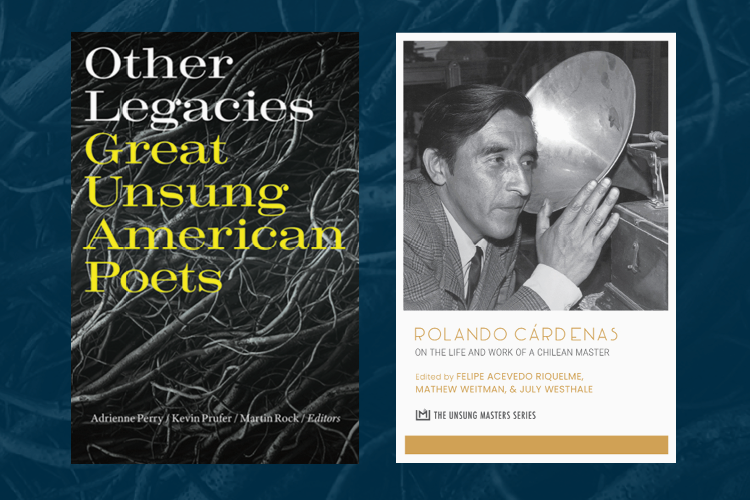
Last month, Martin Rock, in his PS essay, “Recovery as Resistance: Rolando Cárdenas, Shreela Ray, and Peter Huchel,” argued that archives are “living sites of resistance,” and he cites the unsung masters who sharpen the “historical lens” through which we understand erasure and authoritarianism.[1] As editors and scholars continue to prevent erasure or even erosion, patching the gaps and silences of history, the archive is a necessary—and fundamental—part of poetry’s story.
Here, I’d like to consider the queer ancestry of Ploughshares and its archive as a treasure trove of queer poetic excellence over the course of the last half-century: poems written by and for queer people, showing us that queerness has always shown up in poetry, and that poetry might be a pathway to understanding queerness. Many critics would tell you that queerness and good poetry emerged through the fragmented voice of Sappho, or maybe Catullus; they might even mention Shakespeare; in a more modern sense, they might cite Whitman or Bishop. These are mostly Western and limited views. We must be reminded of our queer ancestors as we navigate the tumultuous waters of contemporary politics.
You are now a we, and we are not alone.
According to Gayatri Spivak, the construction of history always devolves into a tug-of-war of individual desire. In “The Rani of Sirmur: An Essay in Reading the Archives,” she writes, “This desire can be located in the slippage between the suggestion that the relation between past practices and historical accounts is transferential,” and to replicate this “might simply mark the site of a radical version of the academic intellectual’s desire for power.” Instead of the impetus for archival retrieval or history being the reconciliation of the Other and its subjectivity, it is often a desire to epistemically re-interpret the “facts” that already stand “true.” In other words, the academic urge to assign value and to identify is damning. However, the urge to see yourself accurately represented is natural. To turn to the archive in search of voices like yours is as natural as taking a walk. You need not be an academic; you need not turn to what we call the “traditional” canon.
As we come face to face with whether or not queer work will be prioritized and preserved, I turn to Ploughshares’s archive seeking queer poetry that is compassionate, daring, and vital; I share the following poems as evidence that the remnants of our history, what we call the archive, is queer.
Eileen Myles’s poem, “Peanut Butter,” originally published in the Winter 1989 issue of Ploughshares, couples erotic candor with an anti-theological philosophy; Myles takes the ordinary and makes it extraordinary. The poem’s opening statement, “I am always hungry / & wanting to have / sex,” depicts unfiltered desire amidst the ordinary landscape of our lives. Myles places value on the domestic: “If you get right down to it the new / unprocessed peanut / butter is no damn / good”. As the poem progresses, Myles provides us a thesis for their poem and for this essay: “I am an enemy / of change, as / you know.” So why try anything new? “All / the things I / embrace as new / are in / fact old things.” What is new is actually old, and reclaiming it does not change the fact that it is, at the end of the day, ordinary. There is a powerful sentiment here. Sex, peanut butter, and swimming are not new. Perhaps like queerness, though, there is the sense of the unknown, the uncanny, even in the most recognizable. “We / swim naked / in ponds & / I write be- / hind your / back,” Myles writes toward the middle of the poem, pinpointing this. But notice how nothing is confusing: everything makes perfect sense, and the images Myles provides are all crystal clear. Love, according to Myles, is in the little things, and if we pay attention, there are endless possibilities within Myles’s poem. Queerness is everyday life; love is innate to all of us.
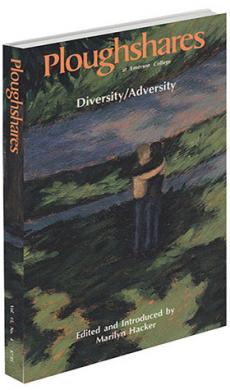
Myles’s poem, published in 1989 by guest editor Marilyn Hacker, not only amplifies a queer voice that challenges literary convention—Myles’s line breaks evoke a sort of breathlessness—but also illustrates Ploughshares’ longstanding commitment to experimental, identity-based work. The poem’s queerness does more than just characterize Myles; it proves to us that the “new” (the queer) has always been around, and Ploughshares is a space for that. “Peanut Butter” is but one node in Ploughshares’ queer network. In other words, Ploughshares is a continuum, a place where multiple generations of queer writers have reshaped what we know as “great” poetry.
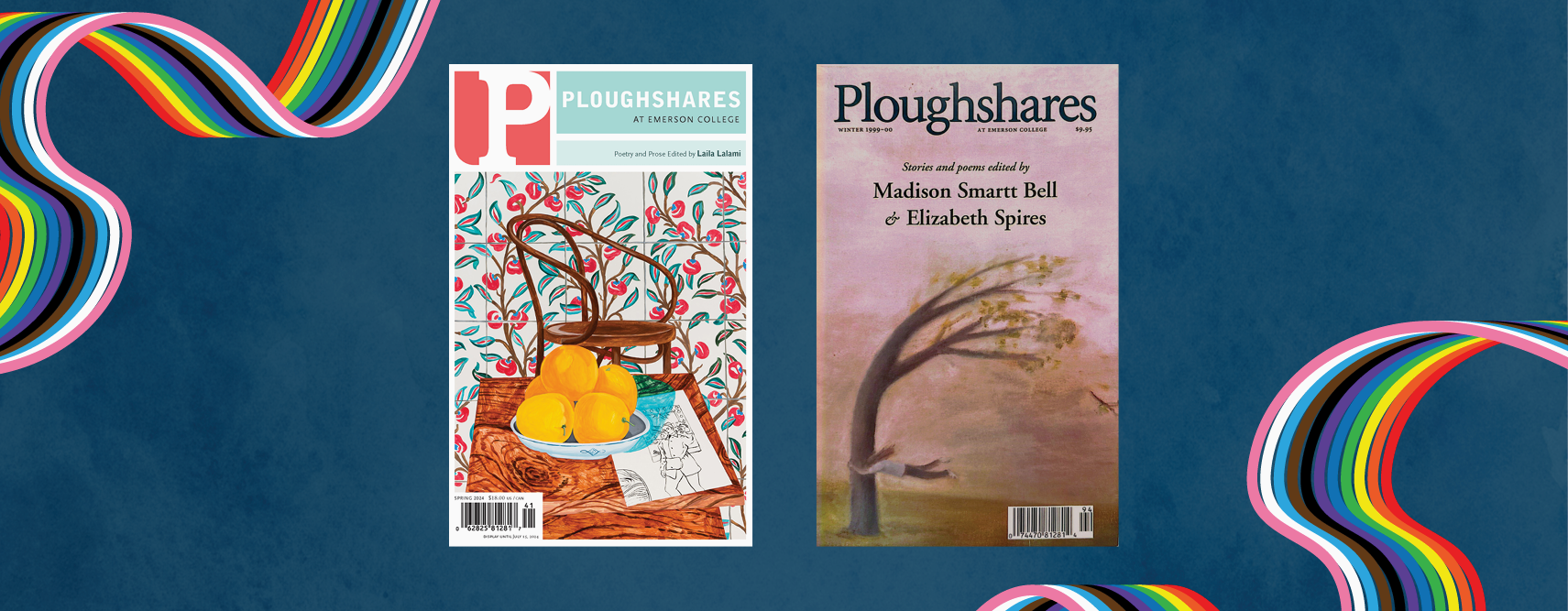
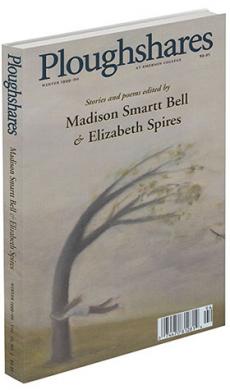
Where Myles’s work is voice-driven and defiant, Mark Wunderlich’s “Seen” is a quiet, foundational poem of queer wanting and meditation. The poem, published the following Winter season in an issue guest-edited by Madison Smartt Bell and Elizabeth Spires, offers a poignant aching toward visibility, an apprehensive depiction of the desire for recognition. Wunderlich’s poem paints queerness in a different form, as a form of tension. The poem’s syntax mirrors this emotional hesitancy. Wunderlich opens his poem with the statement: “In your field of vision, there is a place where no image is fixed.” There is no enjambment; the statement takes up the whole line.
Queerness, both within Ploughshares and outside of it, is not a monolith. No, it is plural, both fierce and tender, both bold and subtle. Take a poem like “Seen” and see this duality:
It is a place where injury carved its cave of nothing,
gathered blackness around a splinter’s wooden slip.
One eye, you say, looks inward
while the other scans the world.
Lines break mid-thought, creating pauses that might mimic a speaker catching his breath before venturing into visibility. The enjambment in the fourth line is mimetic of queerness. There is a tremor, a breath, a moment in which queerness is simultaneously bold and risky. This is most evident when the poem shifts from external observation to internal confession, as if the speaker is testing how much of themselves they can (safely) disclose. The other eye, the one that “examines the self’s invisible wanting,” is internalized. Wunderlich clarifies with the next sentence, which is also sliced in half via enjambment: “In that equation, I believe myself to be / a point connecting one place to another, / somewhere you paused to draw lines to the next warm station.” The speaker then makes a declaration, admitting they “emit no light, no heat.” Rather than resolving this tension of visibility, Wunderlich leaves the speaker in a suspended state of becoming. The final image, soft and tentative as the cupped hands, refuses such closure. This refusal is itself a queer gesture, resisting the simple narrative of certainty that normative structures demand (see Jack Halberstam’s Queer Art of Failure). Instead, “Seen” honors the ongoing, always-shifting nature of queer visibility. Publishing this poem just a year after “Peanut Butter,” Ploughshares advocates for a spectrum of queerness that includes both tenderness and directness. Publishing a poem like Myles’s in 1989 foregrounds a queer voice that is unapologetic and stylistically unruly at a time when such work was often left in the margins.
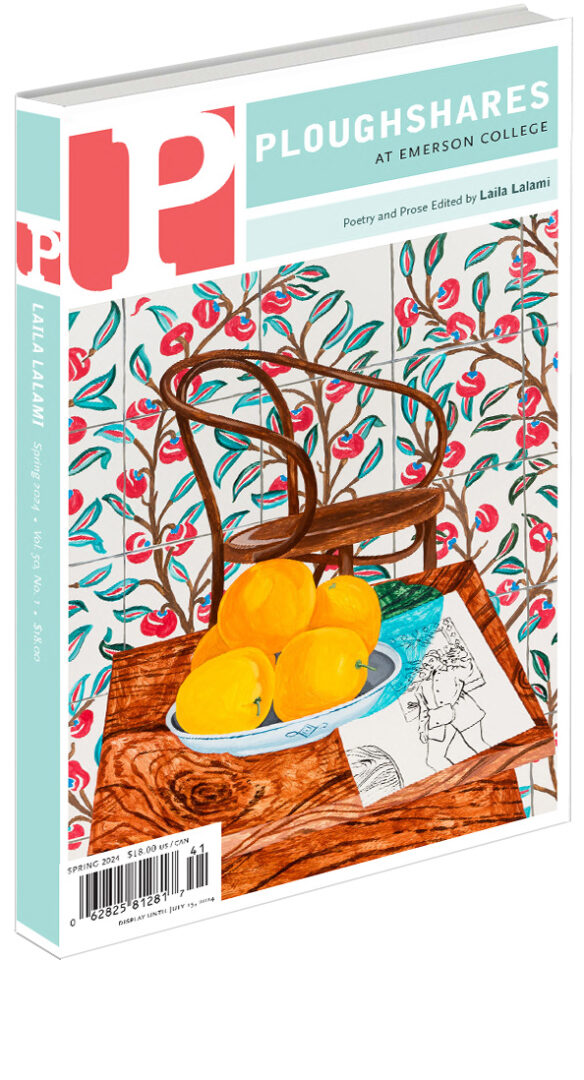
Jaz Sufi’s “Notre-Dame,” published in the Spring 2024 issue, guest-edited by Laila Lalami, is a delicate poem written in couplets. Sufi’s poem, a quiet meditation (until it isn’t), begins subtly, capturing the feeling of falling in love. She writes in the opening couplet:, “Like a pomegranate, I wore my garnets quietly. Nude / lip, beige tongue. I took the shape of clouds passing by.” Instantly, there is a dichotomy here. The speaker of the poem provides a paradox in the opening line: “I wore my garnets quietly.” A garnet, a precious dark red stone, is hard to miss. The juxtaposition with the word “quietly” could perhaps mimic queer experience in the States right now. Amidst the current wave of anti-gay legislation, it feels paradoxical to exist in the LGBTQIA+ community right now. Love is celebrated—especially in June, as seen in ad campaigns and rainbows on billboards—and yet, hate crimes continue to happen. Legislation is passed against us, and kids are losing the ability to comfortably express their gender identity or access gender-affirming care.
As the poem unfolds, Sufi delineates the breadth and depth of queer existence. She writes, “I was a tool for divination—you used me to find / water & blamed me when I drank. We dreaded [.]” Immediately, the reader has an image of divine creation, a sort of creation that is preconditioned to follow logic. This divine body of Sufi’s, however, is not protected or exalted. It is used, and blamed, and even evokes dread. The pronoun “we” draws the reader in, as the speaker identifies with the reader. You are now a we, and we are not alone.
The lines following amplify this: “We dreaded / you together. Still, I kept my smile on, even when” and the line ends, flowing into the next, echoing the ebb and flow of existence, heightened by Sufi’s masterful use of enjambment and caesura. Not all thoughts end a line; they slither onto the next, or lose a moment to a period in the middle of the line. Despite its history of shared curatorship and many guest-editorships, Ploughshares demonstrates that it is a leading figure in publishing queer poetry. No queer life looks the same, and Sufi’s is but one depiction of that—just as Wunderlich and Myles’s.
Ploughshares was founded at the height of the civil rights movement, in 1971; it was the dawn of the queer revolution (and bell-bottoms), the war in Vietnam was raging, and many Americans were questioning institutional structures of power. Alongside the iconography of the 70s were the 1969 Stonewall riots, which marked a new era for queer bodies. Shortly after Stonewall, Marsha P. Johnson led her grassroots advocacy for women and queer people. Moreover, Gloria E. Anzaldúa and Adrienne Rich, both pivotal during the late twentieth century, both published writing on queerness. Spivak was writing her dissertation on Yeats’s lyric speaker and translating Derrida. The era was integral for activism and women writers; the two became inextricable.
Named after the Plough and Stars, an Irish pub in Cambridge where Peter O’Malley bartended, DeWitt Henry and O’Malley imagined a literary magazine that promised to publish both emerging and established poets; the duo called some of the poets “literary blokes,” but they accepted writers of all kinds. O’Malley and Henry shook on it.[3] Seven years later, the growing magazine received a National Endowment for the Arts grant, and in 1989, Ploughshares became affiliated with Emerson College. Decades later, Jenny Molberg is at the helm as Poetry Editor and Editor-in-Chief.
A few years ago, when Evie Shockley visited my graduate poetics seminar, she once told me that every poem should and must be read aloud. Building on this, I argue that every queer poem should be chanted. On June 26th, Ploughshares hosted “A Celebration of Love,” a Zoom reading which featured readings from past contributors Kelli Russell Agodon, Chen Chen, Eileen Myles, Jacques J. Rancourt, Jaz Sufi, and Mark Wunderlich. In the reading of his poem, Chen Chen showcased how specifically breath functions in his poetry: breath drives the poem, and not line breaks or metaphors or repetition. The poem is habitual, reminiscent of how one might tell a story. He narrates how love manifests and how love is sometimes found in a Wegman’s parking lot–another way of finding our way home.
[1] Spivak, Gayatri Chakravorty. “The Rani of Sirmur: An Essay in Reading the Archives.” History and Theory, vol. 24, no. 3, 1985, pp. 247–72.
[2] Rock closes his essay with this sentiment.
[3] Henry, Dewitt. Perspectives: Uncollected Essays, 2026.
[4] Muñoz, José Estaban. Cruising Utopia: The Then and There of Queer Futurity. NYU Press, 2009.

Kit Freeman (she/her) is in the last year of PhD in English at Southern Methodist University. She is also a Senior Reader of Poetry at Ploughshares.