Alice Hoffman on Reading and Writing about St. Teresa of Ávila
I went to the Divinity School because I have no faith. I didn’t lose it. I never had it.
I don’t believe in politics or in religion, in God or angels. I don’t believe in families or in friendship. I don’t believe in unconditional love.
I don’t believe in love at all.
That is, as a person.
As a writer, however, I believe in everything.
I am a divided self, and if my disassociation began in trauma, it has been lived out in reading and writing, most especially in writing.
A rapture came upon me so great that it almost took me out of myself.
St. Teresa of Ávila
The act of writing for me is similar to a trance state, to channeling, to the ecstatic state of a religious visitation or a prayer. While writing, I am not in the world we live in, but in another world entirely, one I have no control over. It belongs to the world of the subconscious. So many of the people I grew up with became heroin addicts, but I found an altered state that was superior to drugs in reading and then writing fiction.
In my own writing life, I read Jung as a beginning novelist, and I have always believed this helped me to access my fiction. Dreams and art both allow the individual access into a secret world the conscious self can’t–or won’t–look into, and in this way, the work transcends reality. Its mythic symbols become filled with meaning not only for the writer, but for the reader. It’s work that speaks to the “heart and spirit.” The poet Rumi wrote, “Poetry is like a boat, and its meaning is like the sea.” Its meaning can be many different things to different readers, as it can change for the writer herself.
In the beginning, there was the word, and therefore words are magic; they create our internal and external life.
I often listen to music while I’m working, but it’s the same music, played over and over again. The purpose of listening isn’t really hearing it; its purpose is to occupy half of my brain to allow the other half–the unconscious part, the magical part–to take charge. It is a method of beginning a trance state. I wouldn’t, for instance, listen to music while writing this artist’s statement, for which I need to think more than feel. While writing fiction, I am a channeler of other voices and other people’s stories and of my own experience, known or hidden. I am using the first language of the world, magic, when I write, and am following the route of the first stories, the oral tradition of women storytellers, myth, and folklore, and magic. When we read fiction, we feel what we read as if it were our own lived experience. As a reader, we are also in a state of dissociation: we are in our own lives, sitting on our own couch, drinking from a cup of tea we brewed, yet we are simultaneously experiencing the lives and experiences and innermost feelings of the characters in the novel. This is the reason some people want to ban books. They are dangerous, if danger means you can understand the life of someone considered to be “other.” Read a novel and you feel compassion; you live the other person’s life.
I have found St. Teresa’s descriptions of her ecstatic states to be similar to the way I would describe my experience of writing fiction. To be taken over, to lose control, to give up all that you are, to hear a voice no one else can hear. St. Teresa was a devoted reader and a brilliant writer, which leads me to believe that for her, these two states of religious ecstasy and reading/writing were similar in nature. It seems that her search for a way to pray and to speak to and hear God involved the feeling of failure, which is also consistent with the search of the writer. Did I write well enough, did I read the correct books, did I suffer enough, did I transcend enough, did I see the truth or only a lie, am I worthy, am I willing, do I think too little or too much of myself, why would I be given such a great gift–these feelings of doubt and worthlessness happen before and after, but not during, the ecstatic state.
In my beginning readings of Teresa’s work, I was confused as to why prayer would be so painful for Teresa, but once I realized the similarities of writing fiction, I had a much clearer understanding of why this should be. I began to understand how the search for prayer could very much resemble the search for creativity and the creative act itself. In both, there is a sense of ecstasy and agony–the visitation of an angel who pierces your heart and brings both pain and pleasure, joy and sorrow that are simultaneously experienced.
In the beginning there was the word, and therefore words are magic, they create our internal and external life. Magic was the first language, and fiction began in magic, in folk tales, fairy tales, and in prayer. Writing is done for oneself, to reach the inner, hidden story of the soul, but also to share and to connect with the reader, and the shared experience between reader and writer is magic. As Teresa was hugely influenced by what she read and was a fanatical reader, it makes sense that she would become a fanatical writer. I have always believed that it is a very small step from being a reader to becoming a writer. Words open the world, they create the world, and then you step into that world. You do so even if no one wants you to, even if you are a woman, an outsider, even if everything you say is questioned and challenged.
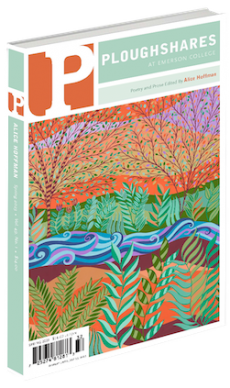
Alice Hoffman is the author of more than thirty works of fiction, including When We Flew Away (Scholastic Press, 2024), The World That We Knew (Simon & Schuster, 2019), The Marriage of Opposites (Simon & Schuster, 2015), The Red Garden (Crown Publishing, 2011), The Museum of Extraordinary Things (Scribner, 2014), The Dovekeepers (Scribner, 2011), Here on Earth (Putnam, 1997), an Oprah’s Book Club selection, and the Practical Magic series, including Practical Magic (Putnam, 1995), Magic Lessons (Simon & Schuster, 2020), The Rules of Magic (Simon & Schuster, 2017), a selection of Reese’s Book Club, and The Book of Magic (Scribner, 2022). She lives near Boston.
Filming and editing by Addison Lamaute.