Language Rushed into Place: A Correspondence on Food, Desire, and Making
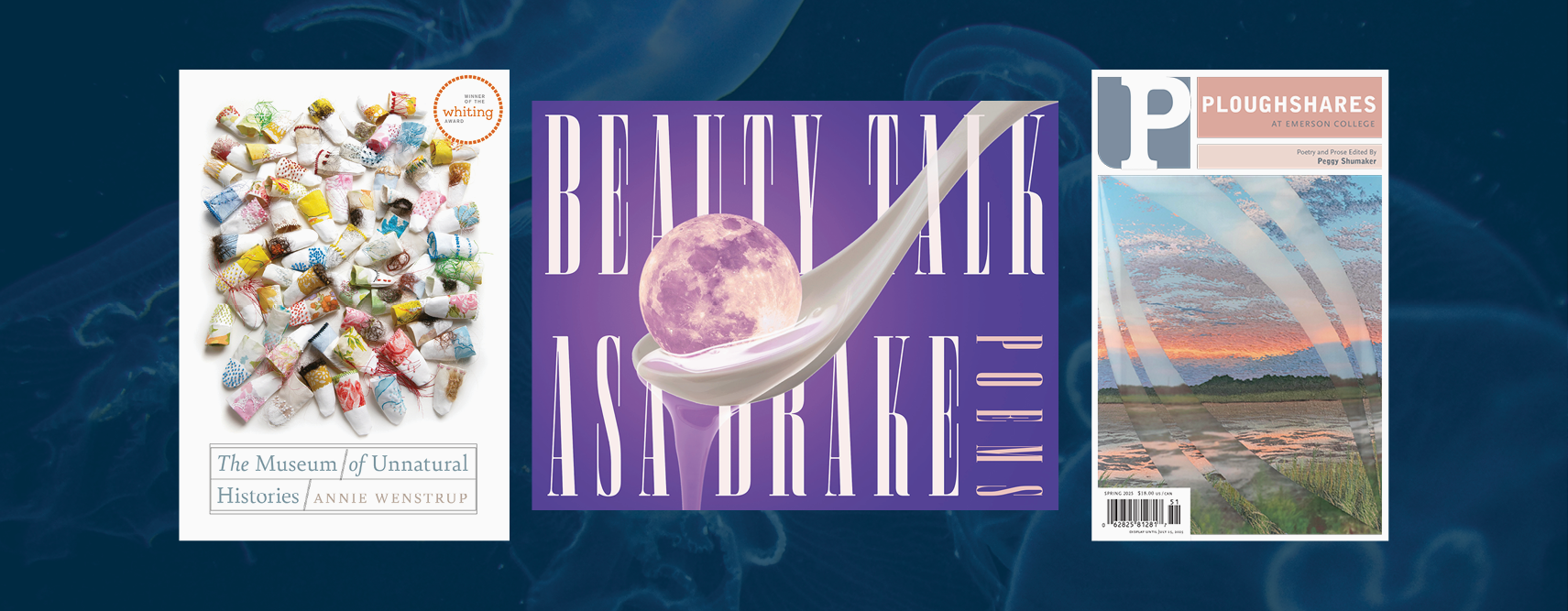
In this illuminating epistolary dialogue, poets Annie Wenstrup and Asa Drake discuss their relationships to food, body image, desire, belonging, and landscape, meditating on the powerful ways poetry can make difficult experiences legible. Rooted in personal history and questions of craft, Wenstrup and Drake’s correspondence shows us how friendship is a tender and ongoing act of witness, care, and artistic practice.
Asa Drake: Let me tell you a secret. There’s no fullness like fullness. That’s why, when my nanay asks, “Busog?” she’s asking, am I satisfied? Is there anything more I can hold in me? Busog is about saying, yes, I’m satisfied, until you can say, yes, I can hold more.
But busog is effortful.
This morning a white woman published an essay stating that she’d rather die than give up her eating disorder. She did so through a critique of a Latina writer’s description of food (a passage I love but will not share in this context). I say “critique” because her rejection of a text (and that text’s invitation toward desire) weighs heavier than her admiring quotation. I am being vague because of my own cowardice and because it can be harmful to discuss the details of disordered eating. You and I are so careful with one another in this regard. I’m interested in how we talk about our bodies. How we beg others to make room for them (the studies suggest that this is a common experience for women, but more specifically for BIPOC women). But this morning, the complaint came from a woman rejecting medical treatment. She claimed her thinness wasn’t valued and that others’ refusal to support her desired body was a kind of persecution. I’m more inclined to believe Gaysian poet Ally Ang when they say “desirability politics are inescapable (because they’re inextricably linked to white supremacy/antiBlackness, misogyny, cissexism, ableism, fatphobia, etc.).”
Like the cyborg replicants of my childhood, I was a beautiful template; I wasn’t full.
Asa Drake
If I’m full, why am I bothered by another woman’s vocal dedication to hunger?
What we ask others to make room for must matter. For example, I’m writing to let you know that I’ve loved gaining weight in my thirties and that’s surprising because as a mixed-race woman I’ve been told that thinness is essential to my self-worth—a message we see repeated through the iconography of mixed-race women which suggests that to be cute, to be the best of both cultures, you’ve got to make yourself small. I don’t think I edge out the niche for white suffering with my half-white refusal to suffer.
Gardening this morning, I gave in to the Filipino urge for an oversized T-shirt, which at times protects me from my own gaze (the gaze of others being erratic and irrational vs. my own, which is absolute and all-knowing). I’ve just reached the point where the fat from my breasts is a near-constant force against my arms. My body constantly reminds me of embodiment, of a future, possible fullness.
Annie Wenstrup: It’s funny, this conversation began as a series of texts—one of those delicious streaks of an interrupted but unending conversation. But now that it’s time to revise towards clarity, I’ve handed you long silences. I had to move my language offline so I could sit with the desire to revise myself away from anger toward something more dismissible, like angst or something more irrational like hate. Why is it easy to text about being angry, but miserable to type it into a Google Doc?
Remember when we were at the residency in Virginia? At dinner, an artist we’d just met commented on my freckles, then mimed moving her sleeve up her arm and asked, “How far up do the freckles go?” When I retell this moment, I focus on how you, Monica, and Mariah moved your chairs closer. How, for the rest of the stay, each of you ensured she couldn’t sit near me. Sometimes I even note the intense (embarrassing) relief I felt that help was offered so quickly, I didn’t have to ask for it. I want to ground the story’s language on the care the three of you sheltered me with.
I didn’t understand our cohort in Virginia. That isn’t true. It’s only that I believe it’s more comfortable to feign ignorance and hope that the audience draws their own conclusions from the anecdote provided.
What I understood about our cohort in Virginia is that in the South, in a group of predominantly wealthy, white women, my body was a source of friction. Isn’t that what a curiosity is? Where something’s incongruence snags an attention?
The residency reminded me of when, at seventeen, I was in a residential treatment center where the cohort was similarly wealthy and white. For almost twenty years I didn’t understand why I ended up sick. Remembering it was like watching a film without the sound on. Without the dialogue, the sequence of events unfolds, but not necessarily meaning.
Twenty-three years ago, a therapist told me fat is not a feeling.
I know what the therapist was driving at. The phrase “I feel fat” is sometimes used as a substitute for “I feel angry” or “powerless” or any other uncomfortable emotion. It’s useful reframing— to a point. But I’m also skeptical about this insistence that an external problem of perception is always an internal, individual emotional experience. I have an emotional too-muchness that spills out of me, yes. And also, when I feel how loosely my body holds me, indeterminate in relationship between self and space, what should I call that feeling?
AD: About the South: if you say you hate something to a Southern woman, she’ll correct you. This has been true all my life, even in a workplace setting where I might sigh and say, “I hate when people try to save a book with possible bloodstains!” and an older Southern woman will tell me, “Oh, you dislike the bloodstains.” I have always wondered if this reaction is to reserve the emotion for the most serious offenses, or because hate is a silent consumption.
I think a lot about consumption vs. observation. What it means to take in a feeling vs. to observe it. And I think this has a lot to do with the restrictions I put on my younger self. I tried, so often, to enjoy the sensorial without the calories. But you have to eat something to make it a part of you. I can already see the colonial allegory here, but can what we mean by consumption be nuanced? I bake a lot, and I often think about the difference between incorporating an ingredient (a blueberry puree, for example) vs. adding an inclusion (whole blueberries into the muffin). I think consumption becomes a kind of incorporation—you can’t pick a puree out of your muffin. If language is like puree. It flavors everything. The eye evaluates aesthetics, but to the stomach, language is more full-bodied.
But here I am, the Southern woman after all. Tell me something you love!
AW: I love sestinas. There’s something, don’t laugh, holy (in the sacred and set-apart way, not the white-robed way) about witnessing a form holding language to enact meaning. All poems carry the possibility that form and language will chart the space of something real yet previously unrealized, but for me, sestinas were the first forms of blazing bushes.
A good checklist can take me there too. During my MFA, Cate Marvin shared a copy of Tema Okun’s characteristics of white supremacy culture during a lecture on confessional poetics. A tidy column listed values like perfectionism, one right way, fear of open conflict, individualism, and a belief in the right to comfort, as components of a value system that upholds white supremacy. For the interested, they’re also the traits that populate my therapy notes.
It was the first time that I understood that my disorder had been a way to navigate my anxieties about being a white-passing, multi-racial person. It clarified that those traits and values informed how to live safely in environments that sometimes saw me as belonging to my mom and sometimes not. More uncomfortably and honestly—they’re values that helped me navigate white spaces by engaging with the fallacy that if I could perform whiteness correctly, I would not be treated badly by the world—the way it treats my mom.
This is what I mean about sestinas and form. The language holds a pattern and the shape that exists in the world, and in doing so, suddenly my life becomes legible to me. Have you ever had the recurring dream that you’re in your home (it looks nothing like your waking home, but it is instead the realest version of your home) and looking for something? You don’t know exactly what it is, but you’ll know it when you see it? I’ve never found the absence in my dream, but the first time I read that checklist, it felt like how I imagine that dream could end.
Because I’m a little pretentious, even when I’m alone, I spend too much time trying to understand why the phrase “quiet luxury” hackles me. I joke that my best writing is born from anger. Then, I spend more time hatescrolling Instagram and see the phrase “quiet luxury” for the millionth time, and this time from an AI Bot account, I realize that I am not joking at all.
What I’m mad about is the imperative underpinning the aesthetic, the explicit directive to be quiet, the false association between silence and wealth. With the right gold earrings (tasteful hoops!) and an MLBB lipstick, an image will speak for you. The time and money required for faux-quiet-luxury is obviously offensive. At first I think maybe that’s what I’m mad about. But then I remember I processed that outrage during my gender studies class and decide that’s not today’s flavor of anger. Maybe what I’m angry about while scrolling is the absolute waste of time, water, and brain cells to manufacture desire—all that work attempting to get people hot and bothered over neutrals. It feels like a joke, and I’m angry I gave it my time.
It takes forever, first to say I’m angry, then to parse out why I’m angry, and even longer than forever to realize that when I do what the therapists once suggested– name where I feel it in my body—it lives where I feel fat. Ick. There it is, the trace of something real moving through the world.
AD: Did you know British boarding schools had a specific kind of “sleeper” gold earring permissible within their dress codes? A literal “right” choice structured to point toward wealth, and that choice reflects a kind of smallness which we call “quiet” to imbue the object and the one who wears it. I loved when you asked me the other day, “Which canonical starving text do you prefer?” There are so many, but it’s Jean Rhys’ Voyage in the Dark that I think about the most. The way she feels light-starved in England, and with no way home, she gives in to the body as an aesthetic object, made safer by espousing a recognizable fashion, or as she says, “anything for beautiful clothes.”
I’m the daughter of a Filipina immigrant in the American South. I grew up in the 90s in a town of under 5,000 people. Until my third middle school, I was the only Asian American student. And before Lucy Liu reached the popular consciousness, I was relegated to fiction. A fantasy. The first time I saw my likeness on television, the actress pretended to be all-white. The second time, she wasn’t human at all.
We’ve only had twenty years of mainstream BIPOC bestsellers and big city food, and already white think pieces say they’d rather die than consume what we’re selling. But what if I don’t want to sell this audience anything?
This morning I went for my run, pulled weeds from under the oranges, ate a slice of lemon cake, then emailed Helen a photo of the cake I made from her lemons. Helen and I were thin-thin in our twenties. Now we’re in our thirties and wear trapeze dresses like the elders we miss. I go over to her house to cook pancit and radish buns that we eat together while convincing her baby to swallow banana mush. For a long time, I thought this life was not possible. In my twenties, I binged each day on a single European patisserie and passed out by 10 p.m. on the subway ride back from grad school. My hunger bought me easy access into any room but without the energy to say anything important. Like the cyborg replicants of my childhood, I was a beautiful template; I wasn’t full.
AW: I suspect everyone’s world shrinks (hahahaha. I am so funny) when they’re engaging in disorder. Having a disorderly house means living claustrophobically close to one’s own belongings, and I imagine mental disorder is the same— being so close to one’s own self that the walls feel as though they’re pressing in. There’s not enough space to make sense of things.
Maybe that is the problem with the essay you mentioned that opened our discussion, and with trying to write about eating disorders in general. They’re boring. What I want is a moment where the repetition of activity and form resolves into meaning, but in most ED narratives that moment never appears. Instead, there’s a cycle of appendages on repeat—wrists encircled, thighs gapping, a full-body mirror check. There’s so much serious frowning. It’s like my favorite display at the Alaska Sealife Center. There’s a floor-to-ceiling column that contains a built-in tank. A rectangle of the tank is visible; paneling covers the rest. A circulating system moves the water in a loop. As it does, jellyfish drift on the artificial current. A hidden light illuminates them. As a result, they appear ghostly white against darkness. It’s impossible to count how many are in the tank, or to understand how they’d move if left unmoved by the tank’s water pump. They drift, remote and unknown.
Or, to borrow some of Vivian Gornick’s language, it’s all story and no situation. I think that’s why I couldn’t write about my experience until after I read Okun’s checklist. It wasn’t that I needed two decades to come to terms with what was wrong with me; I needed a different form for understanding the experience.
AD: During summer break in elementary school, I used to spend May through July with Nanay and my cousins in Manila. I’d get vomitously sick. I couldn’t keep food down. Nanay believed there were two possibilities: 1) that I hadn’t developed the same immunities as my cousins and 2) that I suffered from usog, something like the evil eye. She always chose to treat me for both, taking me first to Uncle Rico, a doctor, and then to a man she called the “quack doctor” who practiced traditional medicine. I always preferred the medicine of the quack doctor. He diagnosed environmental dissonance, though that wasn’t the name he gave it. He believed I was more vulnerable without my mother (she’d accompany me to Manila for the first two weeks but have to return to the States before me for work) because I was less recognizable (as Filipino and as family). Uncle Rico gave me antibiotics and the quack doctor gave me permission to avoid social gatherings where I’d have to perform both being my mother’s daughter and being foreign. The quack doctor tied a red string around my belly and I’d feel, for a little while, held to this other place that I wanted to call home.
I still consider the validity of the quack doctor when I struggle with conventional diagnostic approaches. For the longest time, I felt I could manipulate the logic of diagnosis, that logic being that a behavior isn’t diagnosable until it interferes with your daily life. But I wonder now how much that logic requires recognition of a different life. The truth is that while I found the assumptions of that “thinspo” article upsetting, I was upset that I couldn’t imagine an overlap between her experience and mine.
Recently I went to a three-day wedding and had to pack three gowns, a fairy tale number. I’m vain enough to believe in my own glamor, but also old enough to acknowledge that my body is living, not the object I once imagined it to be. Last year, I started buying dresses that allow for undergarments that can exaggerate the wild proportions of having enough. I can see that it’s unnecessary to wear a compressive bra under six feet of smocked silk, but there are days I rely on the history of an object to protect my self-image.
I’m interested in how we think about fit and what you’ve said about boundaries. At the wedding reception, I became friends with a woman who also works with language but whose office asks that she have someone else record her pieces for a “native speaker” sound. We started talking about how this wedding was different, perhaps because the couple is interracial, or perhaps because the couple is interracial and same sex, or perhaps because the couple has taken so much care to help us love each other. It was the third night of mingling, and neither of us had been asked where we’re from. But she’d been thinking about how to answer.
The woman at the wedding told me, When the war started, I didn’t know where to say I was from. I wanted to say I am from the garden.
The garden she referenced is near her apartment. The garden has a permit to connect to the fire hydrant during periods of water restriction. She emphasized that the garden holds the permit—not any individual—but she and her husband hold onto the special attachment to make a sprinkler out of the hydrant for kids cooling off in the summer.
There’s a term I read recently, “plant blindness,” which describes how people frequently overlook plants and their social and environmental roles. But I wonder if the opposite is also possible. If some of us seek out flora as a way to better define our environment, our sense of belonging, even the bodies that form ourselves. Not wallpaper but survey lines that denote where we might best thrive.
Because of an Instagram account I’ve been following, I now know that the flowering tree by the museum I visit most often is from the Philippines. The malabulak tree in St. Petersburg was planted in 1965, the year of my mother’s baptismal records. When I first moved to Florida, I used to climb into the malabulak as a way to avoid people who made me feel out of place. I spent hours collecting its huge red flowers. Is it an accident that I felt most protected within the canopy of my Pinay relation?
For me, the metaphor is a selfish choice of self-preservation. When writing a poem that centers my own hybridity and the way my mixed-race identity frequently leads to confrontation, I diffuse the harm I anticipate with an image of the natural world. Ecology is full of examples of hybridity, harmful and beneficial. Earlier, when we talked, you were telling me: It’s wild strawberry season. I feel like this is a very good place to inhabit. I’ve been thinking about landscape as an alternative to the self-portrait. What emerges are poems about my relationship with the natural world. I find it easier to engage with questions about my relationship with public space than questions about my relationship with the people who visit them. But frequently, these questions mix: What are the power dynamics between me and a trail of sugar ants during my lunch break? What solidarity might the egret in the cemetery offer me after a cat call? How might the language others use to describe non-native species reflect my fears about how they think about me? How can I find a good space to inhabit?
AW: When I was working on my manuscript, before I knew that it would be a project book, before I understood the material, I told myself I was building a place I could inhabit. It was not a comforting thought. It made me cry. To be fair, everything makes me cry. It was like the first night I spent in my first apartment. I didn’t know how to be alone, and I didn’t know how to fill the space and time in a way that wouldn’t hurt. I went to bed early. Eventually I fell asleep.
The next morning I cried. I cried because I didn’t have any coffee filters. I cried because I’d been on my own for twelve hours and was pretty sure I’d already failed at adulting. What kind of grown-up doesn’t have coffee filters for their Mr. Coffee? While I was crying, my friend Ashley stopped by before she went to work.
Ashley lined the coffee basket with a paper towel and brewed a pot of coffee. It bothers me that this is the clearest part of that memory, not if she teased me or hugged me, but how her hands moved and how the coffee appeared. Form is like that, a shape for something that wouldn’t exist otherwise.
I’ve asked before, but I still get stuck here: is it important to parse out the origin of the artist in Virginia’s curiosity? Was it racialized? Sexual? What rough edge caught her attention? I ask, knowing the question is as useless as one hand wrapped around the opposite’s wrist.
In The Museum of Unnatural Histories, I wanted a form where if I rolled up my sleeve, the shape the sleeve traced wouldn’t be my arm, but the path the audience’s eye took while following or not following the sleeve cuff. I hoped to withhold my own image (Schrodinger’s freckles) and gesture at the persistence of the audience’s gaze.
I loved when my mom would take my brother and me to the art supply store. At the checkout there was always a display of mystery capsules captioned Just Add Water. The capsules looked like oversized pills for clowns, cartoonishly bright in primary red, green, yellow, and blue. Once home, my brother and I would peel the cardboard away from the plastic blister that loosely held the capsules. Then we’d drop them one by one into a container of warm water. First the capsule’s plasticky outer would soften gelatinously. Then, the now-exterior interior would swell, the once-compressed edges opening into a dense cellular matrix. It would continue to expand unevenly, and my brother and I would begin to guess what shape would emerge once the filling was saturated with water. T-Rex. No! A ship! Maybe a triceratops. Now it looks like a bird. And then, the last bit of foam would unfurl, the final appendage determining which of us was right.
When I think about writing in form, I think my job is to let the language be water, to let it fill whatever shapes are already there until they register.
When the dense, red packet transformed into the impression of a cat’s, complete with ears and a curved tail, it became something indexable, which thrilled me. That’s how I feel when I work with form, and the work’s structure moves from organizing the pattern of language to the interplay between pattern and language into a shape that summons meaning.
In Virginia, you asked why I hadn’t included more about my mom in the book. At the time, she was present in one or two lines in a poem that was later cut from the manuscript. I explained that I didn’t want to give that relationship to the (assumed white) audience. And you asked if I could write the poems about my mom and then decide later whether to include them. You explained that it might allow me to become unstuck.
I didn’t want to write them for the book, but I did want to write them and have you read them. It is so embarrassing to be earnest—why? Writing for a specific first reader changed how I thought about the manuscript’s general audience: less pugilistic, more sincere. You reminded me that gesture still needs witness.
AD: One of the difficulties about being mixed race is that not all stories come together. Or they come together, but not for the audience. Places let me point and say, “This is where I was born,” while also directing the reader away from my own body. I’m grateful for the landscape where I can exist at the edge of others’ perception. The way one imagines the painter at the very edge of a canvas. I wonder if making a metaphor of the landscape removes us from it—an action in opposition to the self-portrait, which firmly pins us to the page.
Sometimes I think that the only point of language is to relay and satisfy desire (my own and others) and isn’t that a fragile construction, a vehicle that takes me to itself? I crave uncomfortable gaps in a text. I’m working on a sonnet sequence but as a monostich sonnet crown—a form Jimin Seo invented for me last week so that I can keep my long lines by creating a sequence of seven monostichs, each of which has a little break or leap to keep to the sonnet’s fourteen-line constraint.
I don’t know what I think I give up when I give up the long line, but I know that I do lose something. I know frequent line breaks keep me from having anything to say. This is a personal weakness that has shaped my craft. I was thinking about how you told me, of your book, “It’s going to be big!” and how that excited me. Oversized! Lots of paper! Special layout! Because these things are necessary to house loved ones and the translations that did and didn’t happen and the conversations that did and didn’t happen, and the heirlooms and reliquaries that were and were not passed into your hands. It means something to take up space, to be given that allowance. Space is a choice, but space is also social and economic and geographic.
It’s difficult for me to claim space, but I’m trying to do it. I’ve started going to the community gym. I run a loop through the local park. I want my body to fit into this geography, to be recognized. But I think that effort is so much more achievable on the page because the social and economic costs are minimized. The poem can take up space, can be located within the very landscape I feel uncertain claiming. I wonder if this is also about desire. As you texted me earlier while I tried to place this feeling: Not empathy but a bell that echoes another with different vibrations.
Annie Wenstrup is Dena’ina poet and the author of The Museum of Unnatural Histories (Wesleyan University Press, 2025). She is a recipient of the 2025 Whiting Award in Poetry and an Alaska Literary Award. She is the Winter 2026/27 Picador Professor of Literature at the University of Leipzig.
Asa Drake is the author of “Maybe the Body” (Tin House, 2026) and “Beauty Talk” (Noemi Press, 2026), winner of the 2024 Noemi Press Book Award. A National Poetry Series finalist, she is the recipient of fellowships and awards from the 92Y Discovery Poetry Contest, Kenyon Review Residential Writers Workshop, the Rona Jaffe Foundation, Storyknife, Sundress Publications, Tin House and Idyllwild Arts. Her poems can be found in the Georgia Review, Poetry, Sewanee Review, and Virginia Quarterly Review.
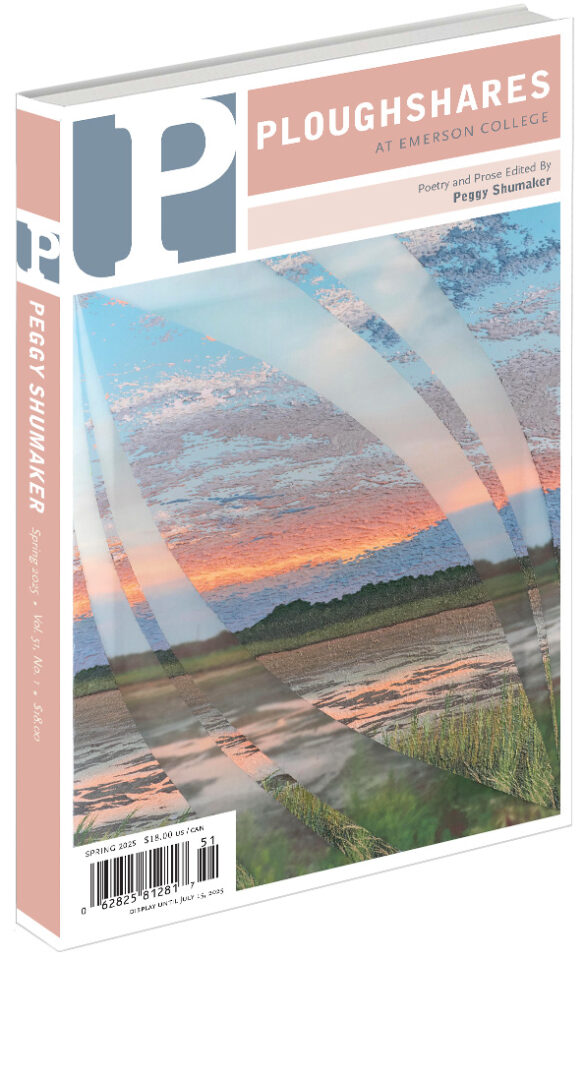
Annie Wenstrup, Sukdu’a II