“The Context of Us”: An Interview with Carmen Maria Machado
As readers, we pride ourselves on curating our personal libraries because they visually represent the collection of genres, forms, and authors we admire most. My bookshelf is a disorganized rainbow of dark-spined British literature anthologies, vibrant blue-green-white contemporary paperbacks, and yellowing copies of my favorites, including Little Women, The Secret History, and The Handmaid’s Tale–each flagged with neon sticky tabs. The books I read are often decorated with highlights, underlines, and marginal notes as a way to join in conversation with the story and its author. If books are annotated, they begin to hold the same preservational value as an archive. Each short-handed comment, asterisk-stricken line, and research-driven note serves as documentation of dialogue between the reader and the writer. A record of what is revealed and gleaned from each reading; evidence of interpretation and deeper understanding. Annotations provide the reader the opportunity to revisit that dialogue with the writer and, with enough time gone by, even the former reading self. This transforms a personal library into a personal archive.
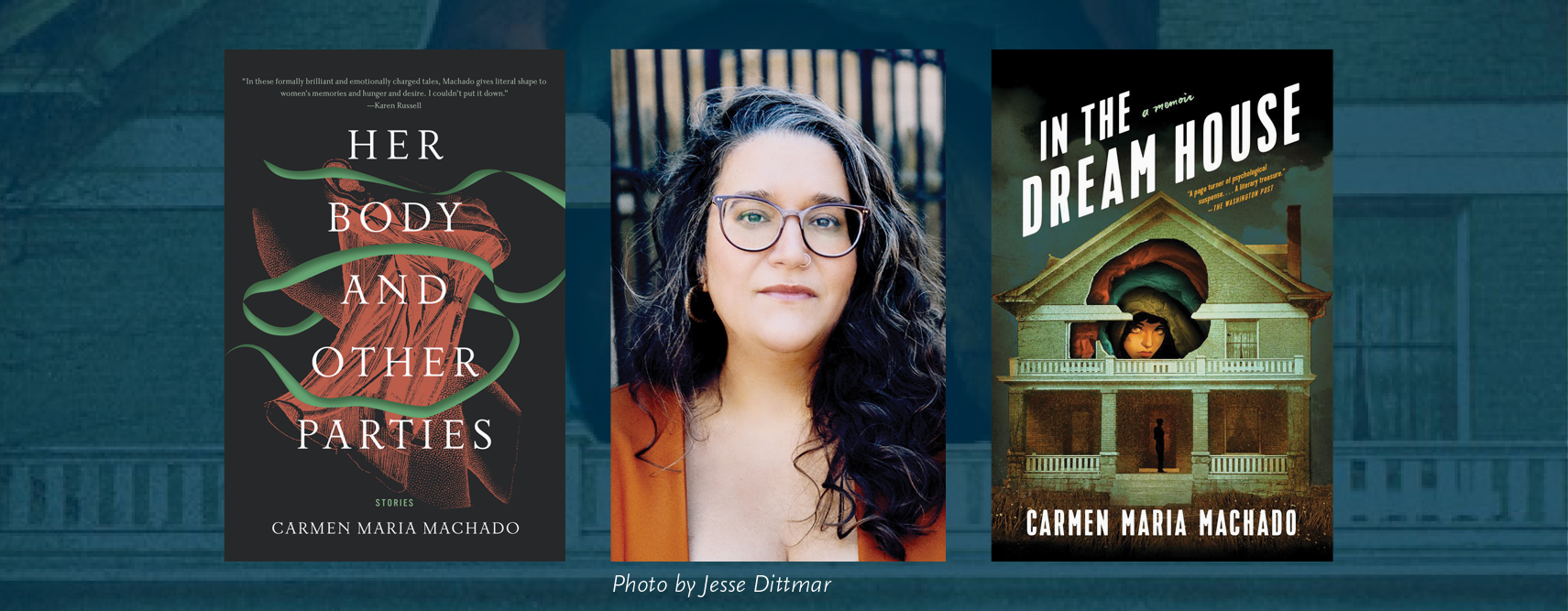
I first encountered Carmen Maria Machado’s Her Body and Other Parties while working the evening shifts at a bookstore. In the lulls between customer service and stocking, I would flip through the pages, captivated by her stories and sentences, and ask myself, “How did she do this?” Inevitably, someone would call for help, and I would slide the book back onto the shelf, memorizing the page number to return to later, then get back to work. Until, during another quiet shift, I walked over to the ‘M’s, and the copy was gone. My heart sank with disappointment, as if somehow my conversation with Machado had been interrupted, and I still had so many questions. I regretted not buying it myself, not adding it to my library when I had the chance. I regretted not offering more to the conversation. I waited patiently until the bookstore received another copy, then I bought the collection. Now, it sits on my bookshelf with a pencil tucked in its gutter.
Conversations with the writers who inspire me most rarely transcend the limits of my annotated pages; however, earlier this spring, I had the pleasure of interviewing Carmen in anticipation of her upcoming Guest Editor role for the Ploughshares Summer 2027 issue. I’m delighted to share our discussion for the PS series in which Carmen speaks on the responsibility of the archive, literary influences that coincide with Ploughshares’ history, the roles of editorialship, and the power of literary citizenship.
–Hayley Pisciotti
This interview was held over Zoom on March 12, 2026.
Hayley Pisciotti: Carmen, thank you so much for taking the time to speak with me today. We’re absolutely thrilled to have you guest-editing our Summer 2027 issue, which is opening for submissions this June.
For a little bit of background about PS: our mission is to place our archive in conversation with current writers and ongoing literary dialogues. The role of the archive, as a concept, plays a significant role in [your memoir] In the Dream House. Can you talk about your relationship with the archive and archival research?
Carmen Maria Machado: I was functionally a fine arts major; it wasn’t actually a fine arts degree, but I was doing photography, so I didn’t do archival work in college. A lot of people encounter that kind of research in undergrad or grad school, but I had gone more of a fine arts route, and that hasn’t really been my experience. So when I was working on the memoir, that research was extremely new to me, and also writing from that research was new to me. A good percentage of writing that book was learning how to do this kind of writing, so not just writing I’m making up in my brain, not writing that is based on my own life, but also work I’m reading, analyzing, and bringing together and trying to get a big picture of certain concepts. I’d never really done that before. And it was hard, because I was learning as I went, like learning to fly as I was falling, you know? But I did it! I figured it out, it just took a minute. It wasn’t the most efficient route, but I did it.
I was learning about these theories, like Saidiya Hartman talking about the violence of the archive, or the silence of the archive. This idea that the archive is, by definition, incomplete and insufficient, and there are people whose voices don’t appear there, and how do we restore their voices to that space? It was one that I found interesting and salient to my project, even though I learned about her work late in the process. It was one of the last things I learned, and it was really helpful because it was this academic underpinning to everything that I’d been thinking about, like, “Oh, somebody much smarter than me has already written extensively about this.” It was incredibly helpful to have another mind, because I thought, “Right, this is kind of what I feel like my brain’s been kind of nuzzling around, and here it is written beautifully and comprehensively.”
So I think that archives are very important; they are also highly suspect inherently. Because why is something here or not here? I remember at some point during my research talking to somebody and saying, “I want to look for back issues of some lesbian magazine from the 80s. I’m having trouble finding it anywhere, but I know it exists.” And she was like, “Oh, I know somebody who has that in her basement.” So when it comes to histories–this is pre-Trump attacking DEI and all that, so just 2018 or whenever I was doing this research–it’s hard. Sometimes queer archives aren’t considered that important, and don’t get maintained. There are people whose voices are not considered as valuable or their work or the history of their people are not considered as valuable, so they don’t get preserved in the same way. And that was before, and now it’s even more catastrophic, right?
I want to add that destruction of the archive is also a fascist act. One of the reasons that there’s such a weird perspective on trans people, for example, is because the Nazis destroyed an entire archive of research done about trans and intersex folks back during the Third Reich. So, we had all this material, all this information, all this research, all these accounts. And the Nazis were like, “This does not serve our agenda.” So archival work is extra important right now, because it’s obviously the opposite of what’s happening in a government sense, and it is a central work to understanding the context of us. Whoever we are. It’s really important work, and it’s really cool that that’s a project you guys are working on. I love that!
HP: If there’s a responsibility to have some effort of truth-telling in an archive, then do you think that responsibility changes between writing memoir and writing fiction?
CM: No, it’s the same. I’m teaching a class right now about speculative memoir or speculative nonfiction, and you could also argue these things are all on a continuum of each other. It’s not a binary, and that’s a pretty commonly accepted idea–that you’re always moving towards truth in some capacity. It’s going to look like different things, like who’s writing is being preserved. Whether or not that writing is fiction, nonfiction, poetry, what material is being considered important enough to put somewhere permanently and which is not.
HP: Ploughshares has published writers who you’ve mentioned have shaped you as a writer, including Ray Bradbury and Helen Oyeyemi and Kathryn Davis. What about their work inspires you, and how do you see your work in conversation with theirs?
CM: Ray Bradbury is a funny example to start with, because he was so important to me when I was young. I used to go to the library and check out the same book–this Ray Bradbury collection from the 80s with this really fucking cool cover, with everything he had written up to that point. I would read his short stories over and over. I loved them. Something in his work always triggered something inside of me. I feel like he was the earliest writer that I self-directed towards that shaped what I was doing. His stories were often high concept, very melancholy. He had this way of writing that was so interesting and so clear. When I learned much later that he supported his family with his writing, and that he would rent a typewriter for ten cents an hour and write frantically because that’s how he fed his family, I was like, “Mad respect, that’s really cool.” He wrote so much, and some of it is amazing, some of it is okay–I mean if you’re writing at that volume that makes sense–but I found his mind so interesting. There was something about him that I really responded to as a young person.
Helen Oyeyemi, I’ve taught her work. I’ve always really loved it. I find her approach to existing genre structures and fairy tales interesting. Mr. Fox is like her Bluebeard story. I taught White is for Witching a few semesters ago in a haunted house class. So she’s plugged into the genres and subgenres, storytelling techniques, oral histories, that I also find fascinating. I feel like her mind goes places that my mind would not go. Which I really like. She is one of the writers who is consistently able to surprise me. Every choice she makes, I’m like, “I would never have made that choice, and I love that she made that choice.”
And Kathryn Davis. I taught her last semester in a class on writing audaciously. We read Duplex. I think it’s similar [to Oyeyemi], actually, where you can never guess where it’s going in a million years. If you asked me to answer, “What is the next scene that’s going to happen?” I would never ever get it correct. I find that invigorating! That is what I’m always looking for when I’m reading. True surprise and a mind that makes me think, “I don’t know what is happening here, but I’m following it very intensely.” That, to me, is one of the things I find the most interesting in writing. I find her work bracing in this way where I never would have guessed, and yet there’s such confidence in it. You move along on it. It’s like the ocean’s holding you, and you’re like, “Alright, do whatever you want to me.” I’m just here, you know? And that’s why I love her work so much.
HP: Yes, there’s such a thrill in not knowing what’s going to happen and just going with it.
CM: Kelly Link was another writer whose work did this to me very early, where I read her work in grad school and it was the same thing. I was like, “I don’t know what’s going to happen next,” and that was really exciting to me.
HP: Well, I would say that your work takes on a similar effect, shape-shifting in genre and form, too. You’ve mentioned folklore and fairy tales–and you’ve worked with memoir, flash and short prose, as well as the graphic novel. In the creative process, are there certain genres or forms that come more naturally to you, or others that feel more challenging?
CM: Oh, I mean, the genre that I find the most challenging is actually one that my new book [A Brief and Fearful Star] uses quite a lot, which is historical fiction–speaking of archival work and research. The origin was, “I am challenging myself to write historical fiction,” because I was kind of afraid of it. I was afraid of doing research and converting that into scenes that did not feel research-heavy, because I feel like when you’re reading work that you can tell when somebody’s trying to wedge in all the stuff they learned–which honestly, I get it having now done it, that makes a lot of sense to me because history is fascinating, being in archival material or works of nonfiction about the past or primary sources of the era is fascinating.
There’s one story in my new book that I read a bunch of books that came out in 1915 for. It’s a story about Twilight sleep, which was a medical procedure that was the common, big, hot medical procedure in that part of history. Basically, women going through and not remembering giving birth, and they would just be handed their baby. Now, they weren’t unconscious, but because they were given a medicine where their brain couldn’t form memories, they didn’t remember going through childbirth. So [Twilight sleep] had its moment; it no longer exists. I think there’s an episode of Mad Men about it, because it went into the 50s and 60s, but now it’s no longer done, because it was quite dangerous, in fact. Not to mention, psychologically weird for the mothers in question. But they were really pushing it like propaganda–there was a real big push in 1915. So, I read a series of primary sources; books that had been published in 1915, including this woman who was a journalist, and she was like, “Okay, I’m not going to give birth, but you’re going to put me through the procedure, and you’re going to interview me.” So there’s this long transcript of this woman in Twilight. She’s being given all the medicine, and they’re asking her questions like “What’s her name?” “Who is she?” And it’s so spooky and so weird. I spent like two days reading these books, and some of the language in them I literally pulled directly out and put into the book, because some phrases were so good.
I feel like that was the challenge for me. How do I turn research, primary sources, et cetera, into good sentences, characters, impulses? To me, it just felt like this tricky thing because I wasn’t used to it. Then, when I did research for the memoir, I was like, “Okay, so I now have some practice reading archival material, turning it into sentences.” Now it becomes turning it into fiction, which is also an entirely different animal, right? But it was continuing that sort of process.
So that is a genre that I find challenging, personally, and I find it impressive when it’s pulled off well because I have first-hand seen how difficult it is to do this well. Certain other genres are just a little more intuitive to me. Both of those things are interesting, like what is intuitive to me is interesting, and also what is hard for me is also interesting.
HP: In the past, you’ve guest edited for The Best American Science Fiction and Fantasy (2019) and Interfictions (2016). Our Summer 2025 issue, guest edited by Victor LaValle, included prose with speculative and horror themes. How do you imagine genre might influence your upcoming role as guest editor for the Summer 2027 issue?
CM: I have no doubt that certain genres and tones may be overrepresented, or because it’s just what interests me–I’m always going to be drawn to horror, for example. That doesn’t necessarily mean that’s all I want to do. Honestly, the thing that gets my attention more than anything else is a good sentence. I’m reading for the Carol Shields Prize now; they just announced the longlist, so I’ve been reading, reading, reading, reading a ton, and it is wild to me. There were books that I read that I’m like, “I would never write a book like this,” “I would never just pick this up randomly,” and yet the sentences are so good, and I’m so compelled by this, that I will just be taken through it to the end. So, to me, it’s more of a je ne sais quoi than just genre–I’m not speaking for Victor, I don’t know what his process was–but for me, I am interested in good sentences, surprise, I love learning things when I’m reading, I love learning about parts of history I didn’t know, or jobs I don’t know about.
I just did an event with T Kira Madden for her fiction debut, which came out two days ago. We were talking about research, and her character had been a projectionist at a movie theater. She said, “I wanted to know what that was like. So I went and shadowed somebody,” because there aren’t many of them left–a lot of it is digital and automatic now–but I think she went to watch them at Nitehawk in Brooklyn. So her minor details are so rich and interesting, even though it’s not a huge part of the book. I love learning about something new that I didn’t know about.
I love just being moved. People think of me as a genre writer, and I mostly write in non-realist modes, but that actually does not mean that’s all I’m interested in writing. In fact, when realism catches my attention, it’s always interesting, because I’m like, “There’s something in here that is pulling me along, even though this is not a genre I would normally gravitate towards.”
Part of it, too, is that I teach. So every single week, I’m getting work–often genre but not always–so you learn how to read whatever’s in front of you. Everything has the capacity for beautiful sentences and surprise.
HP: When you consider the process of selecting other writers’ works to establish a literary dialogue, could it be similar to choosing the order of your short-form memoir pieces and the stories in your collection, Her Body and Other Parties? If we think about the editorial process as a form of literary curation, what do you think makes the process similar or different?
CM: It’s hard to say because things I’ve edited have sort of depended. Sometimes I’m given a shortlist that I’m already drawing from, like the Best American Science Fiction and Fantasy. When it’s my own work, I want to see how these things are in conversation with each other. So when I put out Her Body and Other Parties, it was by no means all the work I had written up to that point. I had written twenty, twenty-five more stories than were in that book, but they didn’t feel like they were in conversation with the stories that were in the book. So I left them out–maybe they’ll appear in other places, maybe they won’t. I was very intentional. Because for me, collections that feel like they are in conversation with each other–as opposed to collections that are just the last fifteen stories somebody wrote–I prefer the former by a huge margin. It’s a different form than a novel, but you still want it to have the same sense of cohesion, the same energetic signature, where there’s an organizing intelligence behind a particular project. Once I selected stories for Best American Science Fiction and Fantasy, I could see certain similarities and themes running through them. Because it’s the things I’m drawn to, so in some way, that organizing intelligence is just me reading for something and thinking, “How do these things speak to each other, and how do they speak to the moment we’re in? Or even the literary scene as it sort of exists right now?”
HP: The role of the guest editor is a great way to serve as a literary citizen. Is there anyone you look to for guidance on how to be a positive, active literary citizen? And if so, how does their perspective or influence inspire you?
CM: I don’t know if I have an answer to that question. I like to do my own thing, so I have to be intentional about choosing to be, as you say, a literary citizen. If I had my way, I would be doing my own thing, where I would not have to worry about it at all. But it is important to me, and I have been lucky in my career to be on the receiving end of that: people reading my work for prizes, people picking my work for anthologies. That work has to happen, and so I understand that. Even though it is not my impulse to do it inherently–fundamentally, I’m kind of a lazy person, and I just want to do my own thing–but I also recognize that it’s actually important work. Also that I’m here right now. One day I’m going to be dead, and I’m not going to be here anymore, and right now I get to be an influence on the scene at large, and I also get to help writers whose work I feel is important and is not getting the do that it deserves. That is the best part of my job: reading something that’s exciting and bringing it up, because I feel like it deserves attention and I feel the writer deserves attention and resources, because the work is really exciting, and it could become even more exciting. People did that to me when I was a young writer. So, in many ways, I feel like it is part of my obligation. I guess that’s my philosophy about being a literary citizen.
Blurbing is the same thing. I can’t blurb everything that I’m asked to blurb. It would be literally physically impossible, but people have blurbed my work, so I do my best to do as much of it as I possibly can. It’s a sort of weird series of impulses pushing me around, but ultimately, the work is really important. And that’s part of my job.
HP: Are there any writers you’re reading right now who you believe deserve wider recognition?
CM: Oh my goodness. The writer whose work I think about a lot because she’s gotten recognition, but she’s a crossover person who I want to have more attention in the lit fiction world is Sofia Samatar. I really love her work. I’ve been following her since her genre days, and she has put out multiple beautiful books in a row. Her work is so exciting and riveting. When I talk about her in classes, some students recognize her name, but not as many as I want to.
It’s so funny for Best American Science Fiction and Fantasy, the work I was reading was blind, and I remember reading a story and thinking, “If I didn’t know any better, I would say this is a Sofia Samatar story. It feels exactly like her sensibility, her sentences, but I would know if she had a story that came out last year, so clearly it was somebody else.” And then when I picked it, and they gave me the name, it was, in fact, Sophia’s story. I was like, “I knew it! I knew it! I could recognize it!” She is just one of the most exciting writers working right now. Just on a sentence level, her work is stunning. She’s so interested in these similar questions about the liminality of genre and speculative nonfiction. She’s the person with whom I’ve been having these conversations about speculative nonfiction and using nonfiction in this way, or using speculation in this way. There’s something so exciting about her, and I want her to have even more presence in the lit world. I want people to pay attention to her because I think she is truly one of our greatest living writers.
HP: My last question is one of my favorites to ask writers: what story or novel do you regularly find yourself returning to, and why?
CM: The answer I’m going to give is the answer that everyone expects me to give, which is The Haunting of Hill House [by Shirley Jackson]. I’ve lost count of how many times I’ve read it at this point.
The most damning thing I can say about a book, or a movie, or any piece of art is that I never need to read it, or watch it, or see it again. It is not going to yield anything new to me as I rewatch or revisit it. The most powerful work that feels like it has the most weight and importance is work that yields new understanding every single time I approach it. Hill House is like that. I came to it actually fairly late. People think I came to it early, but I read it in grad school, so it’s been basically fifteen years. I’ve probably read it forty times, because it’s a short book, it’s a fast book, and also it yields new things every time. Its sentences are so beautiful. I swear there are things that weren’t there last time. It’s so funny, and so heartbreaking, and so beautiful, and surprising, and it’s so much for like 120 pages. It’s not a long book, but she packs so much in there. And I’m like, “If I could write a book this perfect, I would retire. I did it, I won, thank you, goodbye!” [Laughs]
It’s a book that is so special, and a really beautiful example of literary horror, where the tone of the book is this increasing tension from which the reader seeks relief, which is how I define horror. And it’s about loneliness and being a lonely child, and not having a good relationship with your parents, and wanting people to love you. It is just so devastating and genuinely scary.
It’s like a magic trick–truly if I could pull this off–I have a book that I have in my mind that I think of as my Hill House. This is how I think about books sometimes, like ”This is going to be my X.” I have one in my mind that I’m not going to talk about too much because it’s still early, but it’s in conversation with Hill House. I can see it and imagine its parameters, and it comes from the same set of interests and concerns I have when I read Hill House. And I want to have the same kind of effect on the reader.
Again, boring answer. Everyone knows it’s my answer at this point, but also if you are reading this and you have not read Hill House, [read it]. Shirley Jackson is wonderful; all of her work is really interesting. She published a lot, but she died so young, so there’s only a handful of books of hers in the world. Her work is so important in so many ways, but Hill House really is just perfect.
HP: That’s a great answer, and not boring at all. That’s why I love asking, because it changes for everyone, but there’s such an innate meaning to it for every writer.
Carmen, thank you so much for taking the time to speak with me. We cannot wait to revel in your curation for our Summer 2027 issue.
CM: Of course. Can’t wait!
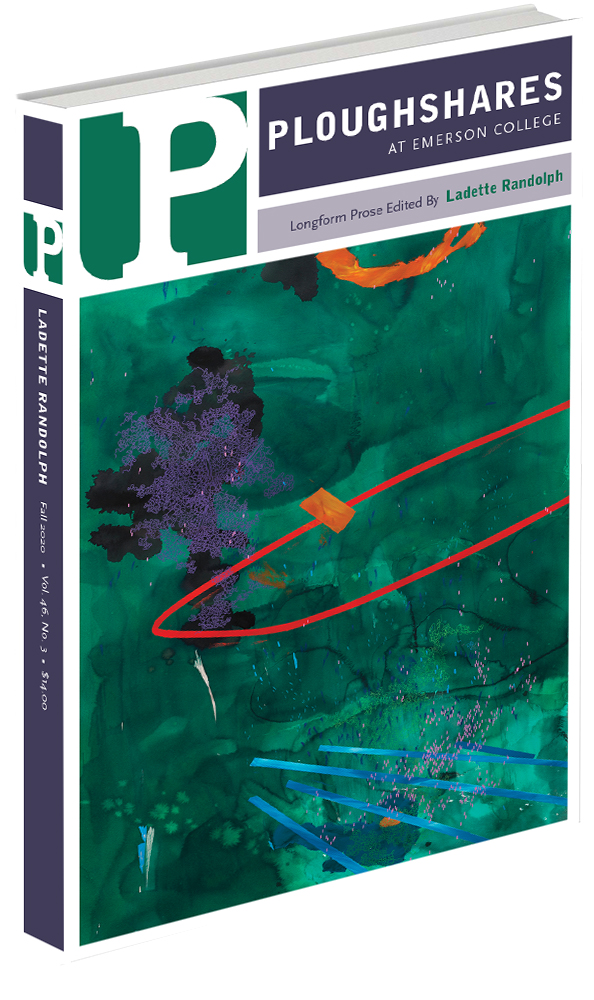
Carmen Maria Machado is the author of the bestselling memoir In the Dream House and the award-winning short story collection Her Body and Other Parties. Her essays, fiction, and criticism have appeared in the New Yorker, the New York Times, Granta, Vogue, This American Life, The Believer, Guernica, and elsewhere.
Hayley Pisciotti is an MFA candidate at Emerson College, where she also works as an Editorial Associate at Ploughshares and teaches First-Year Writing. Her writing has appeared in The Sine Qua Non, The Tributary, and other publications.
Video editing by Jonny Ulasien.